Civil Engineering
Battery Energy Storage (BESS) Infrastructure
The foundations, groundworks and civil infrastructure that BESS installations sit on — engineered to carry the load and self-delivered by our own teams.
Get in TouchThe foundations, groundworks and civil infrastructure that BESS installations sit on — engineered to carry the load and self-delivered by our own teams.
Get in TouchBattery energy storage units are heavy, sensitive and built to stand for years — so the civil engineering underneath them has to be right. Foundations have to carry concentrated loads and stay stable, hardstandings have to take delivery and craneage, and the surrounding infrastructure has to be built to the same standard as the rest of the connection.
HWBC delivers that civil scope — reinforced foundations and bases for battery units, inverters and switchgear, the ground around them, and the infrastructure that ties a storage installation into the wider site — all with our own workforce, plant and machinery.
Reinforced concrete foundations and bases, engineered to carry battery units and stay stable long term.
Screw piles and ground screws are a faster, lower-concrete alternative to poured bases where ground conditions suit them. We can take screw pile installation on as part of the wider civils package.
Foundations for inverters, transformers, switchgear, control kiosks, CCTV columns and met masts across the compound.
Clearance, topsoil strip, cut and fill and formation levels — the enabling works that turn a field into a construction platform.
Load-bearing surfaces for container deliveries, crane pads and outrigger positions, plus laydown and storage compounds for the build.
HV and LV cable routes, ducting, draw pits and containment connecting the battery units, inverters and switchgear into the site.
Earth mats and earthing grids laid in with the foundations and cable routes, tied into the equipment and the connection.
The groundworks a site’s fire strategy calls for — spacing and separation between units, bunded and contained areas, bases for fire water tanks and pumps, and access built for appliances.
Perimeter security fencing, gates and access control civils, plus acoustic fencing and screening where planning conditions require it.
Surface-water drainage, attenuation and outfalls, with all-weather access roads and trackways serving the compound.
Surplus soils put back to work as screening bunds and landscape features, with reinstatement and seeding to meet planning and biodiversity conditions — see land restoration.
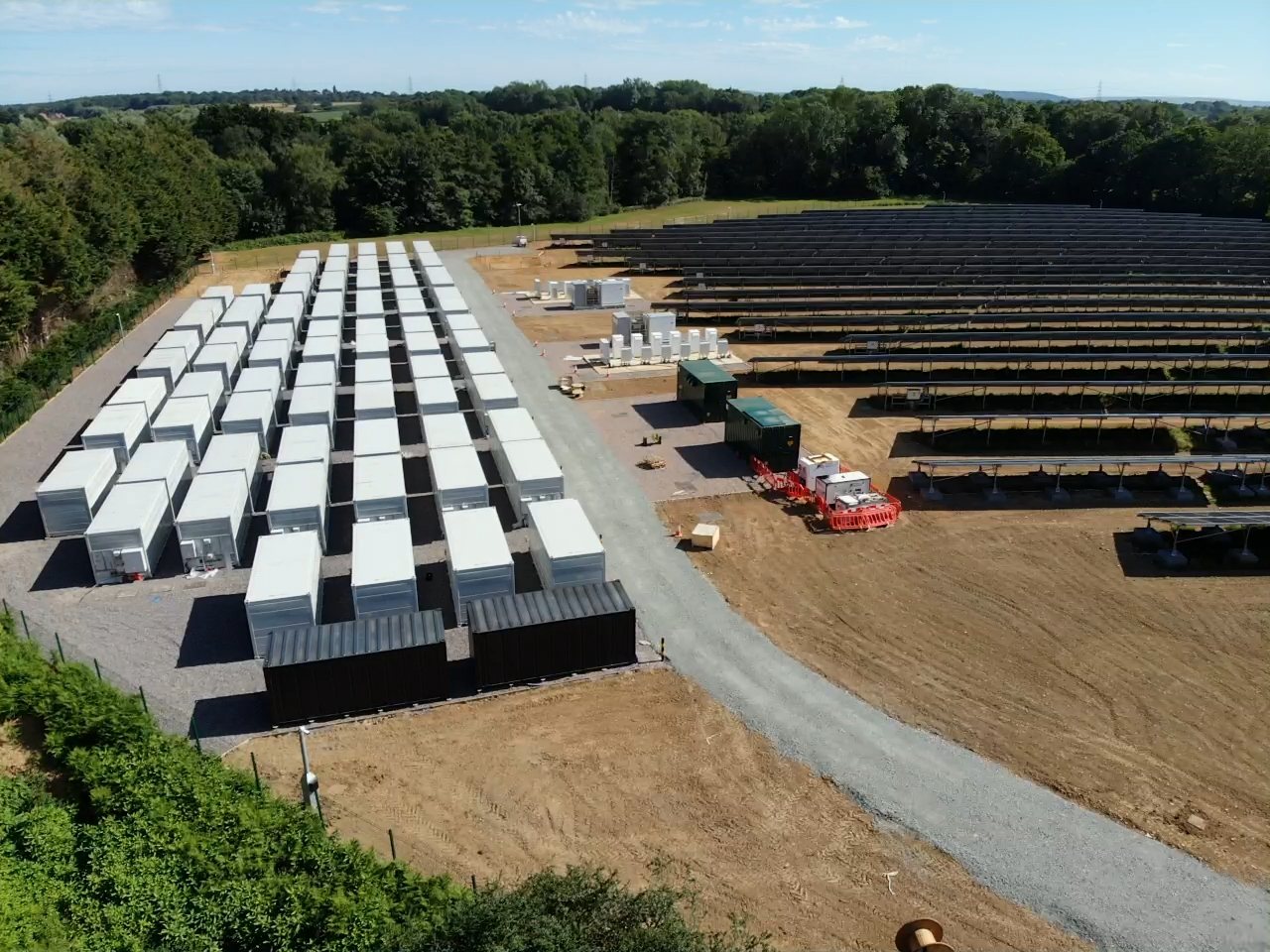
The full civil engineering package for a solar and 20.7MWh vanadium flow battery hub: site establishment and compound, access roads, drainage and two balancing ponds, switchgear bases, battery and solar ducting, earthing, CCTV foundations and reinstatement. The MVPS units were installed onto screw foundations, with HWBC delivering the groundworks around them.
3.2km ducting & pipework · 181 chambers & manholes site-wide
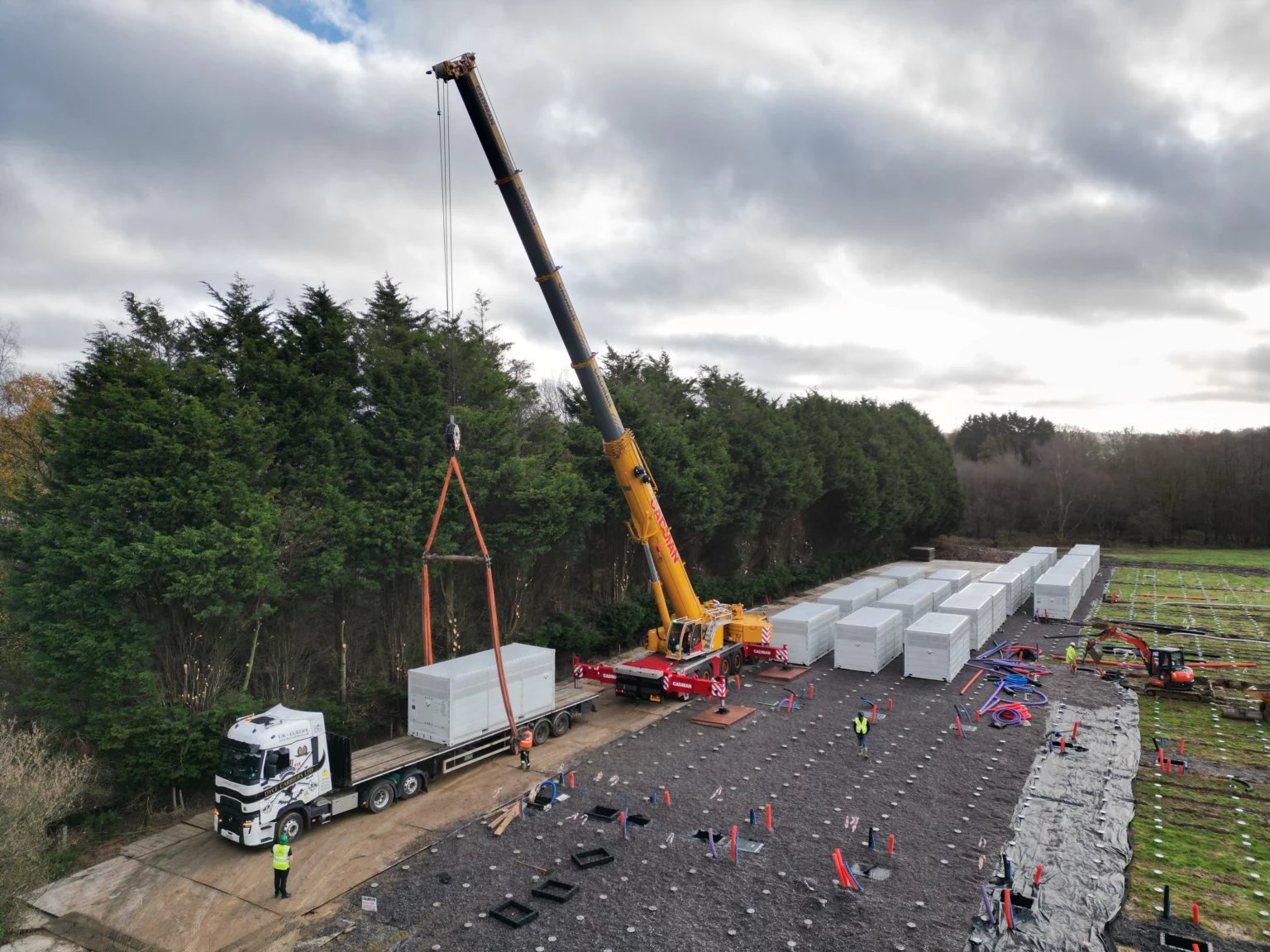 Battery units landing on screw piles
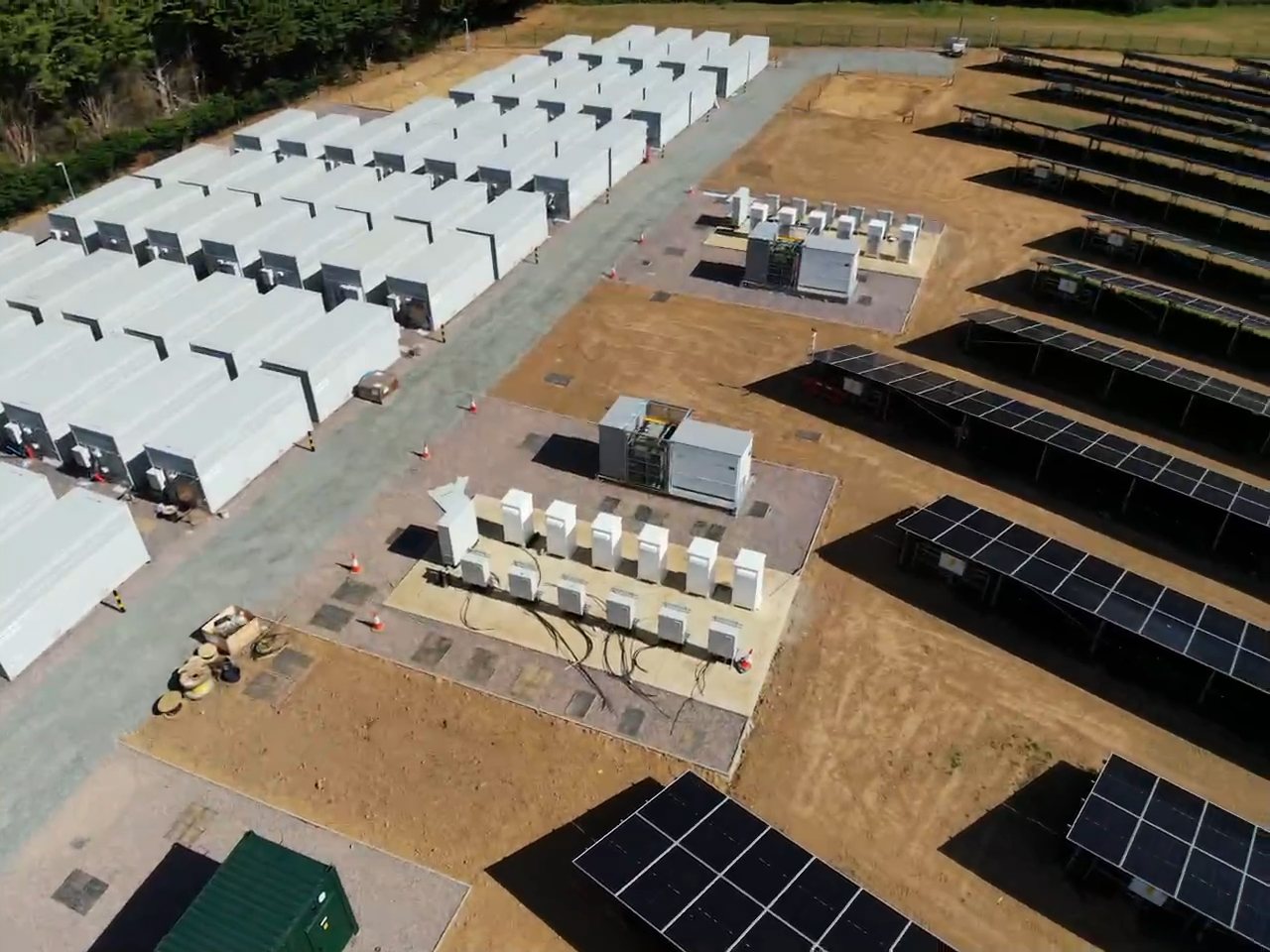 The finished compound
 Switchgear cable entry
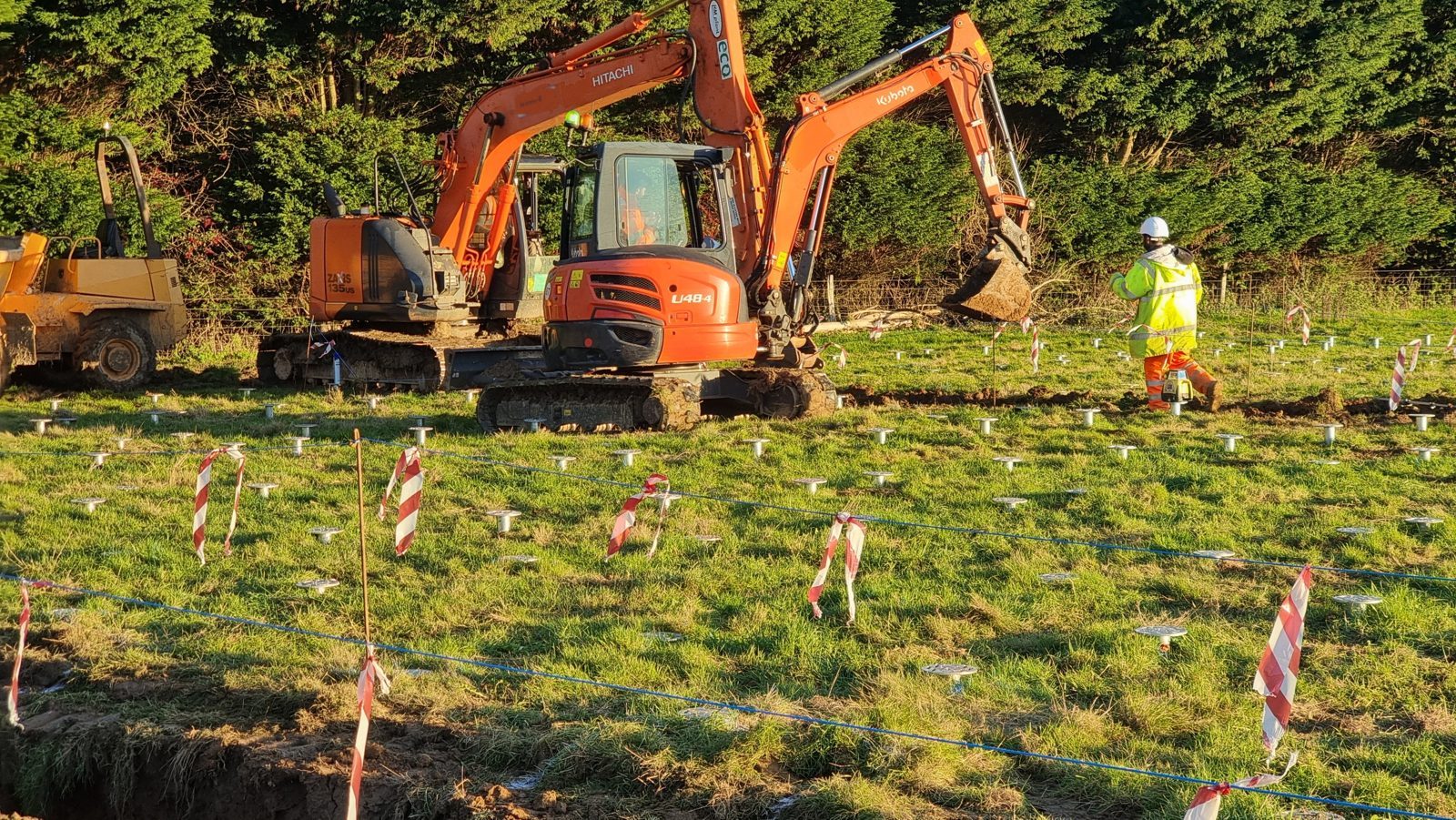 Screw pile array
 Rebar cage
 Base pour
Everything between the field and the equipment: clearance and earthworks to formation level, foundations and bases for the battery units, inverters, transformers and switchgear, hardstandings for deliveries and craneage, cable trenching, ducting and containment, earthing grids, drainage, access roads, fencing and reinstatement. On most sites it is the first trade in and one of the last out.
Both are used on battery sites. Reinforced concrete bases suit heavy units and poorer ground; screw piles are quicker, use far less concrete and can be loaded almost immediately where ground conditions suit them. We build concrete bases ourselves and can take screw pile installation on as part of the civils package.
Yes. Earth mats and earthing grids go in alongside the foundations and cable routes, so the earthing, ducting and bases are sequenced together rather than fought over later.
Yes. We build the civils a site’s fire strategy and planning conditions call for — separation distances between units, bunded and contained areas, bases for fire water tanks and pumps, and access routes sized for fire appliances. The strategy is set by the project’s designers; we build to it.
Yes. Most of our work is the civils package under an EPC or principal contractor, alongside their electrical and installation teams. We also work direct for developers and asset owners.
Yes. We maintain sites long after handover — monitoring, HV and LV inspections, thermal imaging, grounds maintenance and reactive repairs. Because we built the ground, we know where the cables run and how it was laid. See maintenance.
On battery storage and solar sites across the UK, from our base in Northamptonshire.