Maintenance
Solar Farm Maintenance & Aftercare
Planned and reactive solar farm maintenance across the UK — monitoring, HV and LV testing, thermal imaging and grounds maintenance, delivered by our own team.
Get in TouchPlanned and reactive solar farm maintenance across the UK — monitoring, HV and LV testing, thermal imaging and grounds maintenance, delivered by our own team.
Get in TouchA solar farm only earns while it's generating. Faults in the electrical equipment, dirty panels and overgrown ground all cost output, and small problems left alone turn into expensive ones.
HWBC provides planned and reactive solar farm maintenance: monitoring, HV and LV inspections and testing, thermal imaging and grounds maintenance. It's all carried out by our own team, on sites we built and sites we didn't.
We keep watch on site performance and equipment, so a drop in generation or a fault is picked up quickly and someone is sent to find out why.
Planned inspection and testing of the high and low voltage equipment: transformers, switchgear, RMUs, inverters, cabling and earthing.
Thermal cameras find loose connections, failing fuses and overheating terminals before they fail. See examples below.
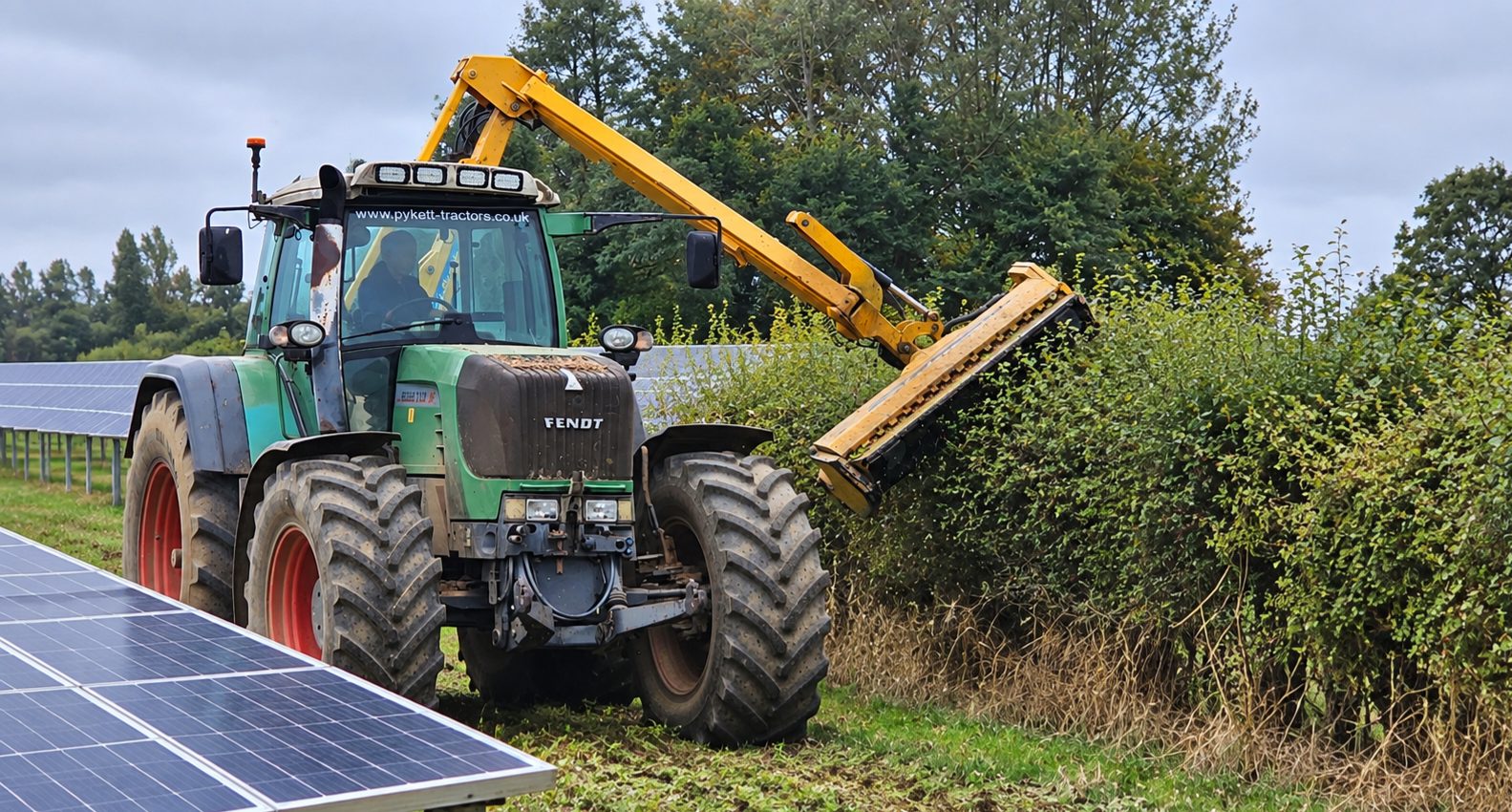
Grass cutting between and around the arrays, hedge trimming and keeping fence lines clear, or sheep grazing where the site and its planning conditions suit it.
Call-out support when something goes wrong: tracing faults, making repairs and getting the site back to full output.
One-off or scheduled panel washing. Sites within reach of our Northamptonshire base are cleaned by our own team; further afield, we arrange a subcontractor.
When a site needs it, we also repair fencing, gates, drainage and access routes — the civil works we build every day.
Electrical faults on a solar farm usually show up as heat before they show up as a failure. A loose or corroded connection, a failing fuse or an overloaded terminal runs hotter than everything around it, often long before it trips, burns out or causes a fire.
We use thermal imaging to find that heat. With the site generating, we survey combiner boxes, inverters, switchgear and DC connectors. Each component is compared against its neighbours, so anything running hot stands out straight away.
Every hotspot is recorded with its temperature reading and a normal photo, so it can be put right on a planned visit rather than after a breakdown.
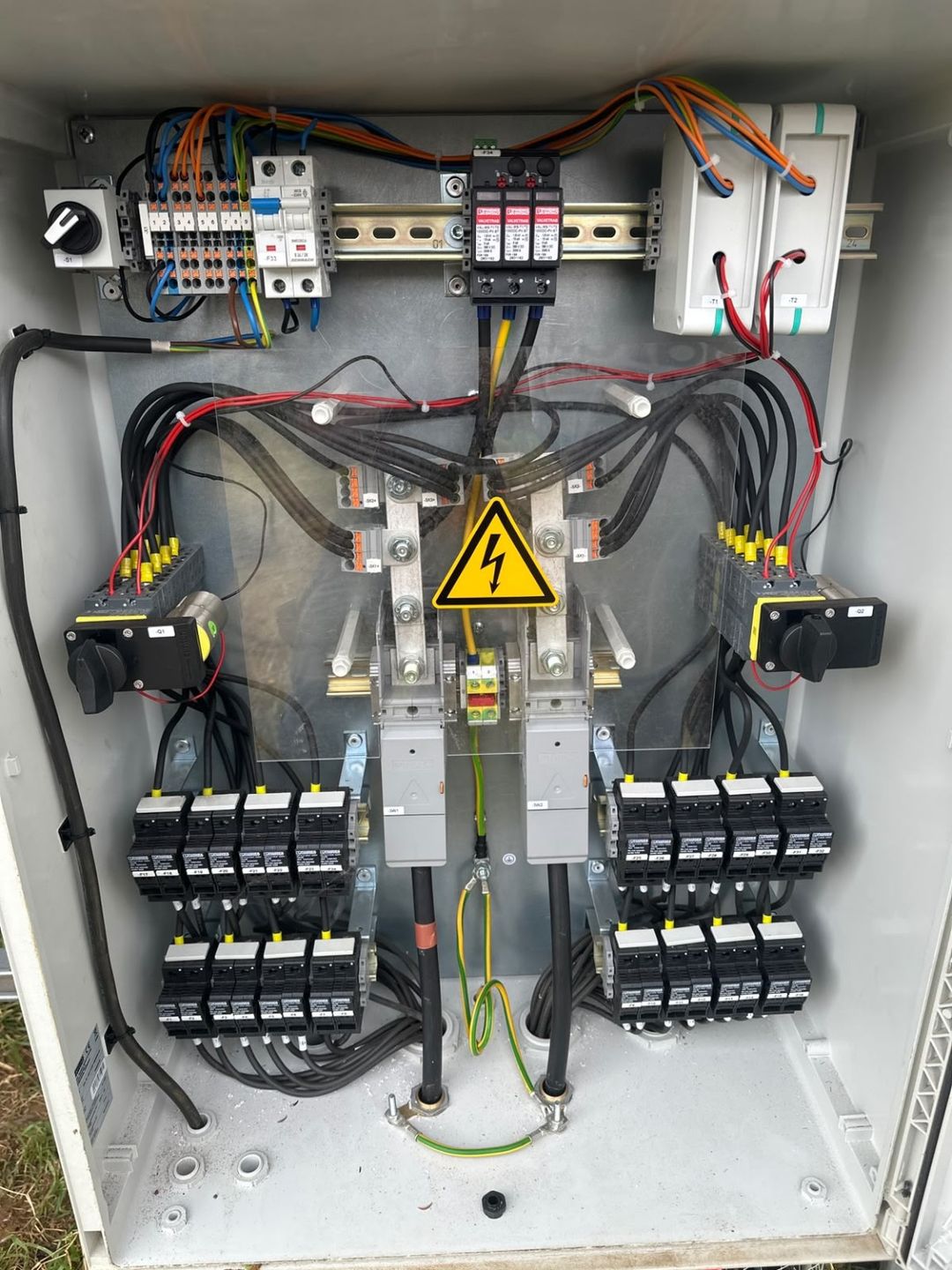 Combiner box
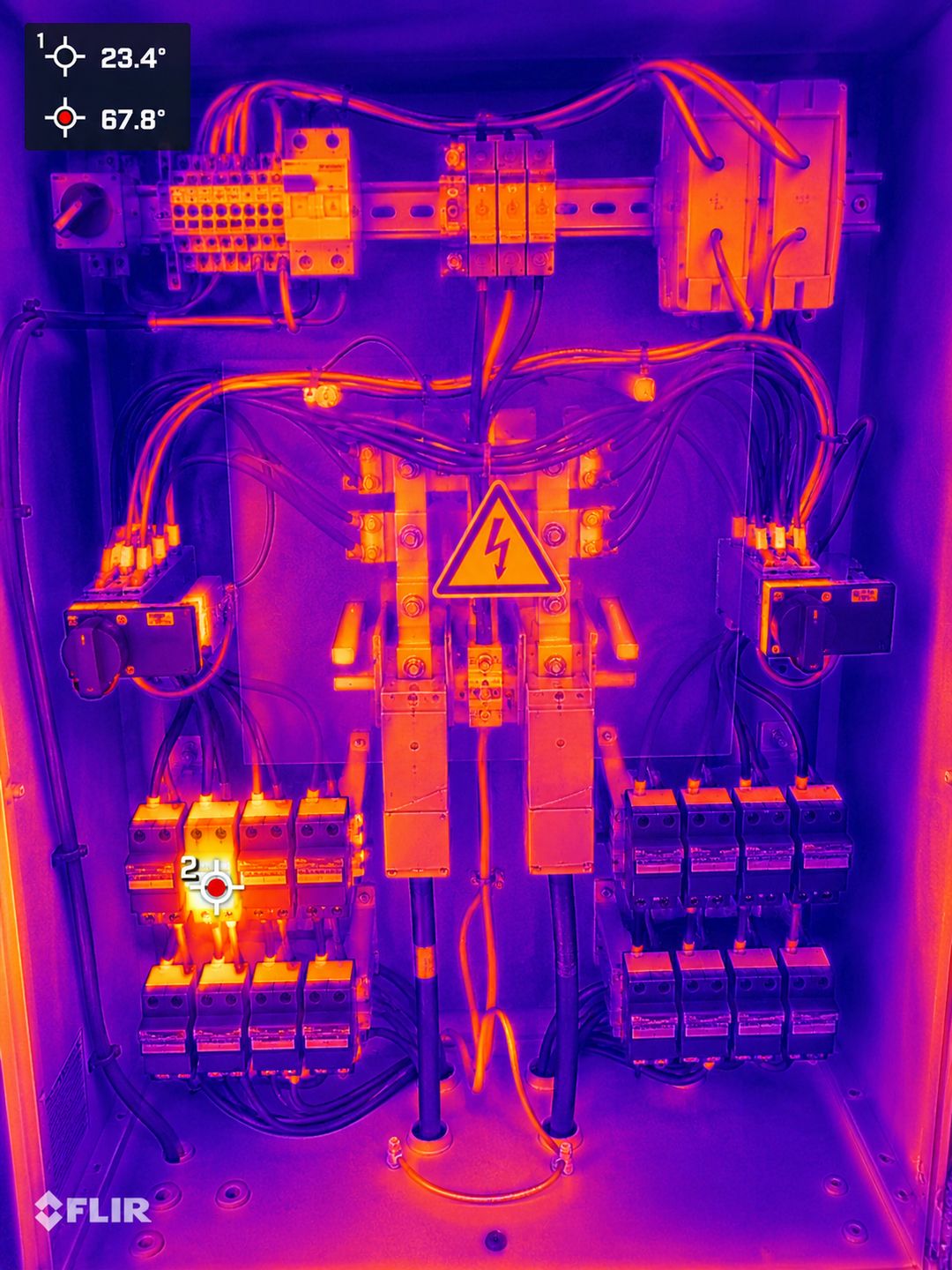 Thermal · 67.8°C fuse
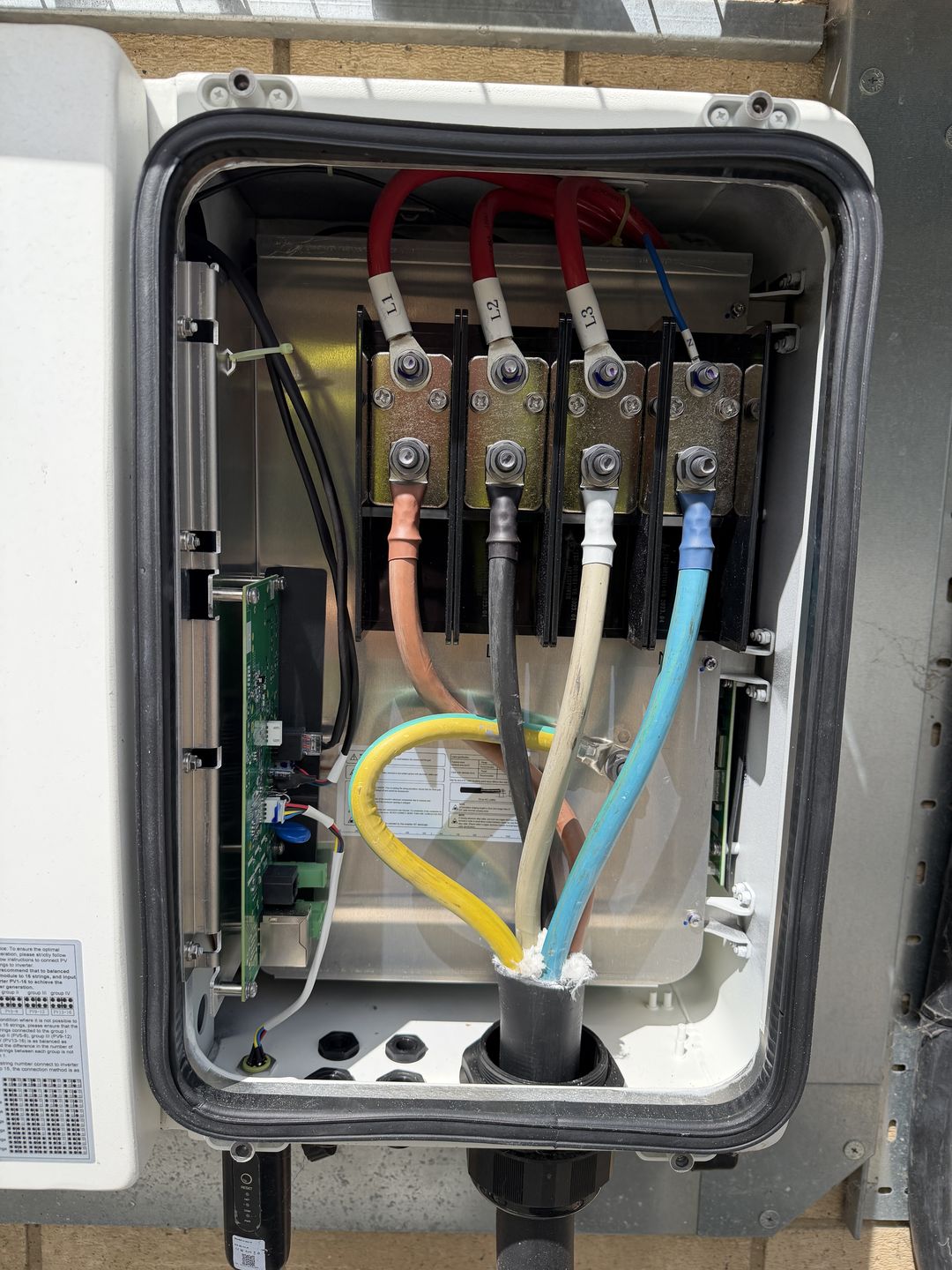 Inverter terminals
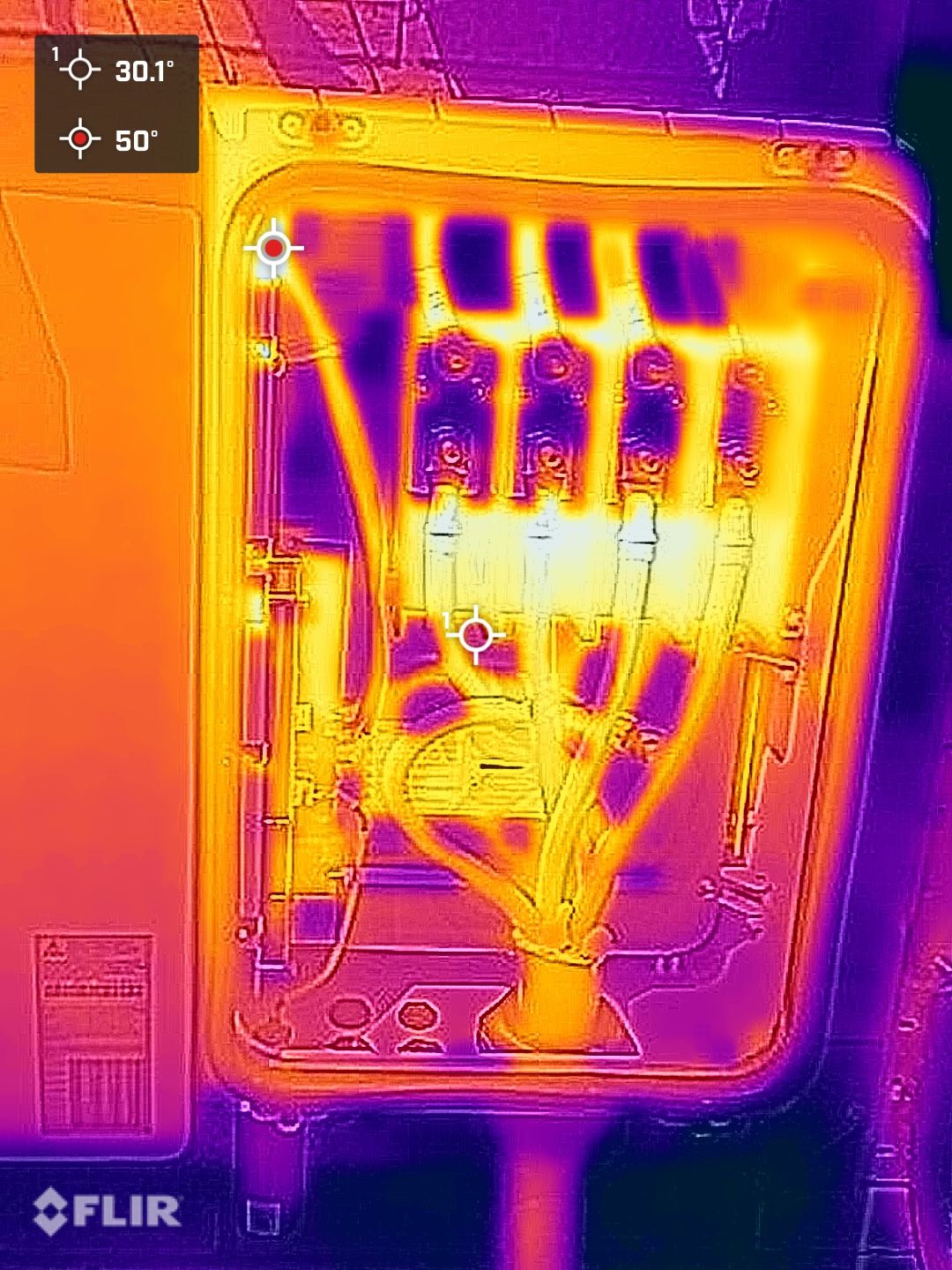 Thermal · 50°C
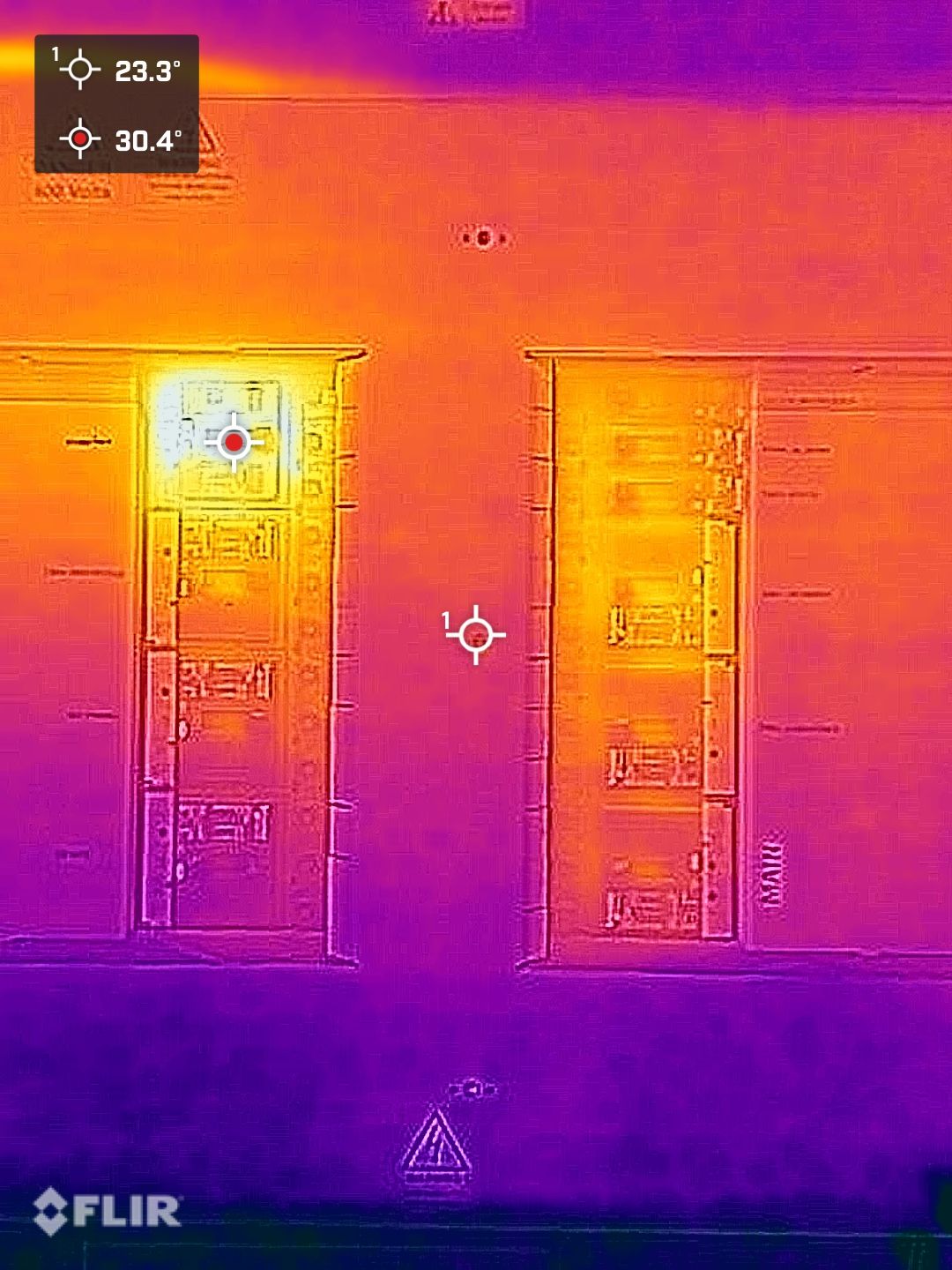 Cabinet · 30.4°C
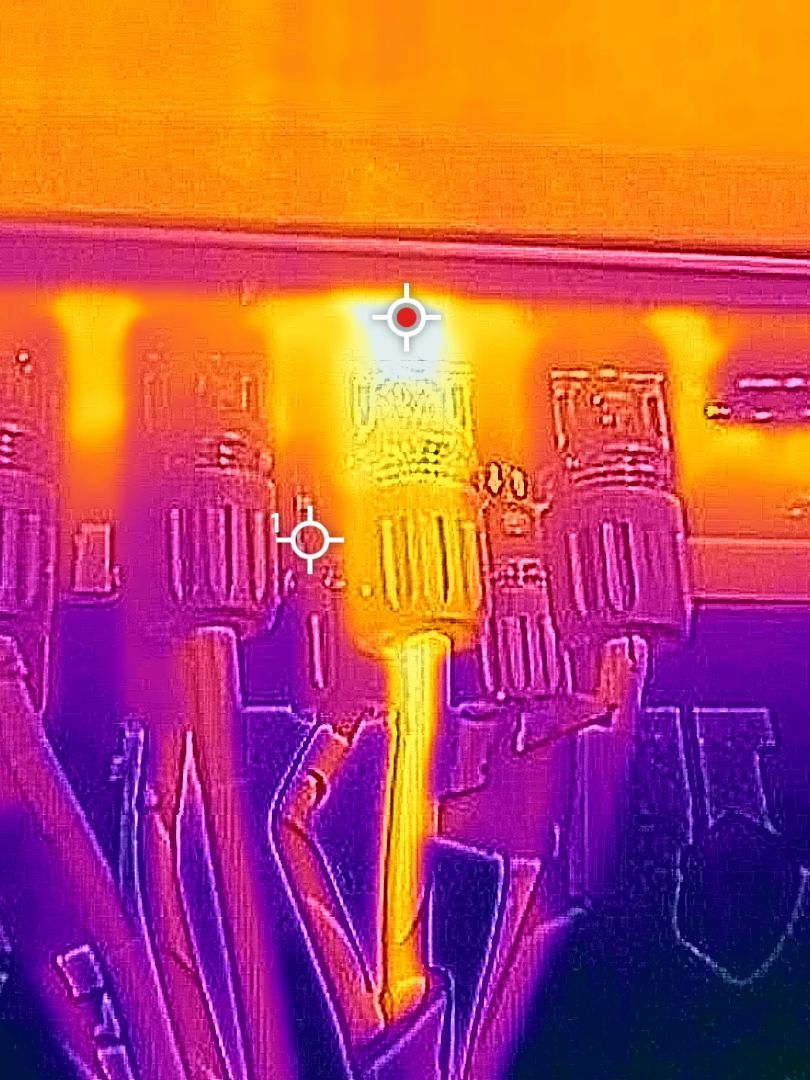 DC connector · 49°C
 Mechanical cutting
Most solar farms carry planning conditions on how the land is managed, often set out in a landscape and ecological management plan.
We work to those requirements with planned mechanical cutting and hedge trimming, or with arranged sheep grazing, keeping the land in agricultural use alongside generation.
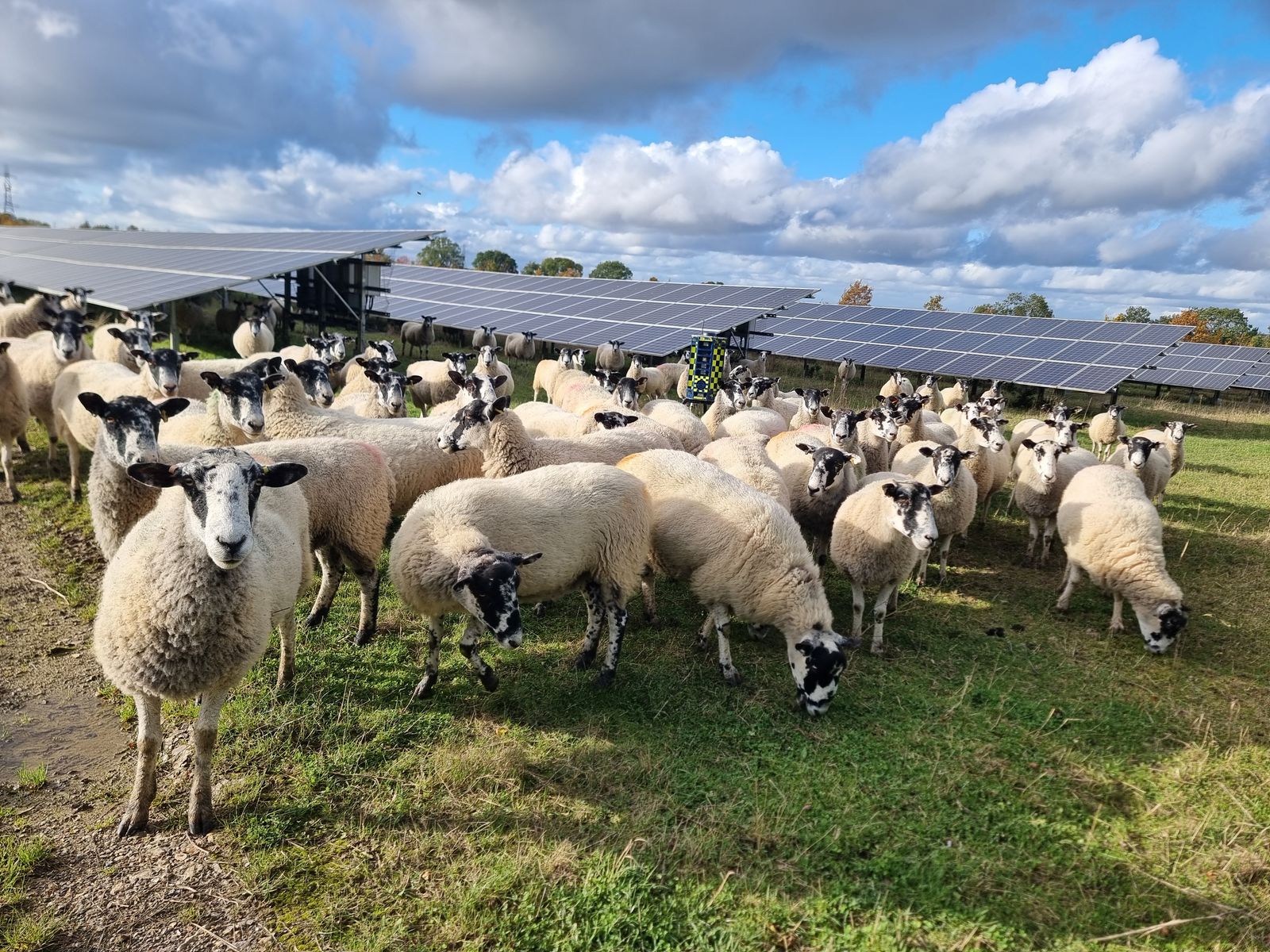 Sheep grazing
Scheduled work that heads off problems before they start.
Call-out support when something needs putting right.
It covers keeping the electrical equipment, the panels and the ground around them in good working order. For HWBC that means monitoring, HV and LV inspections and testing, thermal imaging surveys, grounds maintenance and reactive fault finding, plus panel cleaning and upkeep of fencing, drainage and access routes when a site needs it.
Most sites have their HV and LV equipment inspected and tested at least once a year, with grounds maintenance and visual checks more often through the growing season. The right schedule depends on the size of the site, its equipment and its operator's requirements, so we agree a programme to suit each one.
Loose connections, failing fuses and overloaded terminals get hot before they fail. A thermal camera shows that heat, so faults in combiner boxes, inverters, switchgear and connectors can be found and fixed on a planned visit instead of after a breakdown.
Yes. Sheep grazing is a common way to manage grassland on solar farms and keeps the land in agricultural use. We can arrange sheep grazing where a site and its planning conditions suit it, alongside cutting and hedge trimming.
It depends on where the site is. On solar farms within reach of our Northamptonshire base, our own team does the cleaning. Further afield, we arrange a subcontractor to carry it out. Either way it can be a one-off clean or part of a planned programme.
Yes. We maintain sites built by other contractors as well as our own. On sites we built, we already know where the cables run and how the ground was laid, which makes fault finding quicker.
We work on solar farms across the UK from our base in Northamptonshire.
Survey the site and agree a maintenance programme suited to its condition, traffic and assets.
Deliver planned works and scheduled inspections, keeping the site in good order.
Reactive call-out support when issues arise, drawing on our knowledge of how the site was built.