Returning land to good condition once the infrastructure is in — reinstatement, seeding and habitat enhancement that meets planning conditions and leaves a site better than we found it.
Get in TouchA renewable project doesn’t end when the panels go live. Ground disturbed during construction has to be reinstated, soils restored, and habitats enhanced to meet the planning and biodiversity conditions attached to the consent.
HWBC delivers that final stage in-house — from topsoil reinstatement and cultivation through to seeding and habitat works, returning construction areas, cable routes and compounds to productive or ecologically valuable ground.
Construction areas, cable runs, trenches and compounds put back to their intended final condition once the works are done.
Topsoil and subsoil stripped, stored and respread as separate horizons, and handled when conditions are dry enough not to damage the structure.
Ripping and subsoiling to break out the compaction left by plant, stone and a winter programme — the difference between land that looks reinstated and land that drains and grows.
Land drains cut by trenching reconnected, and new land drainage where it is needed — see drainage.
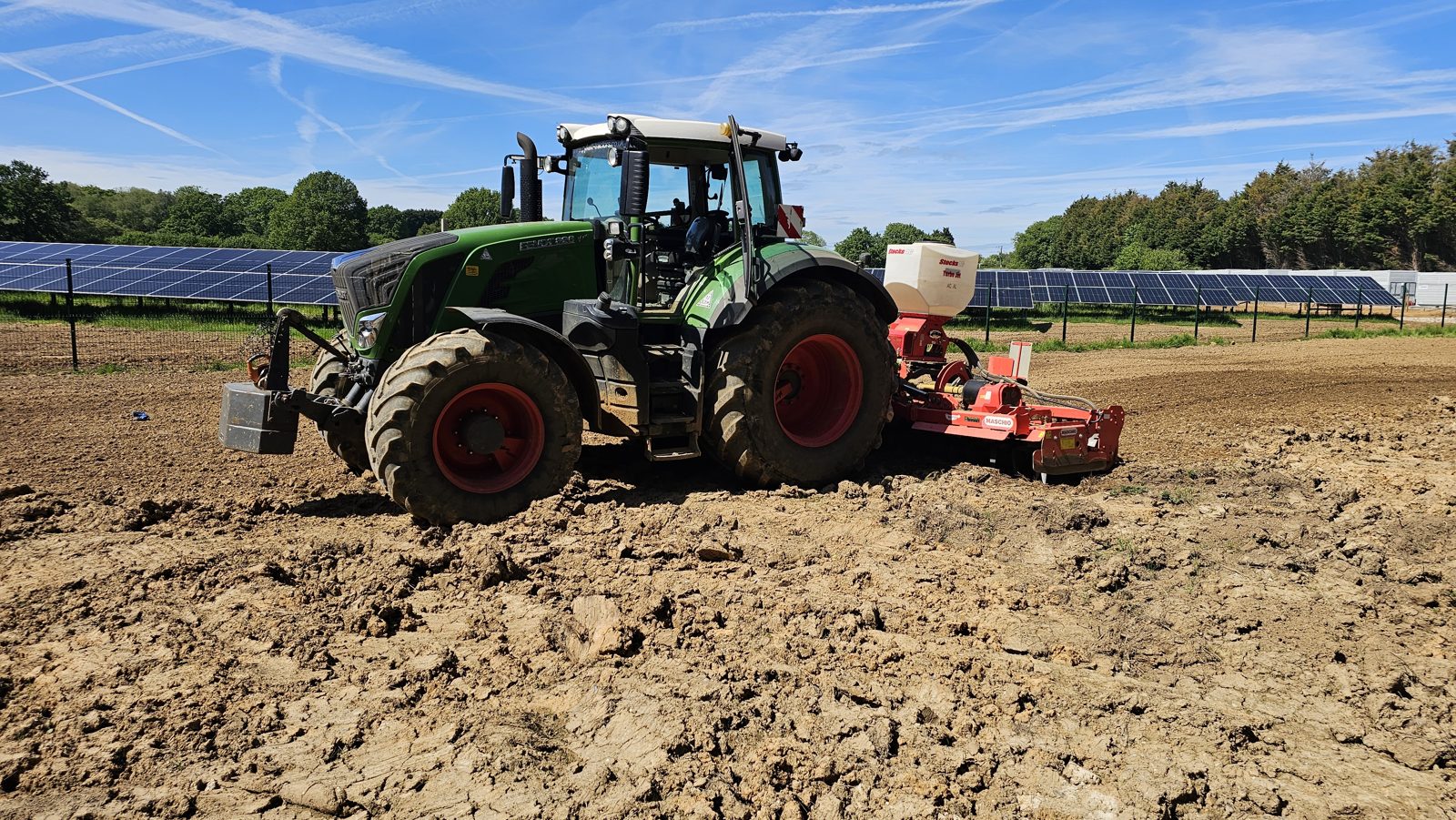
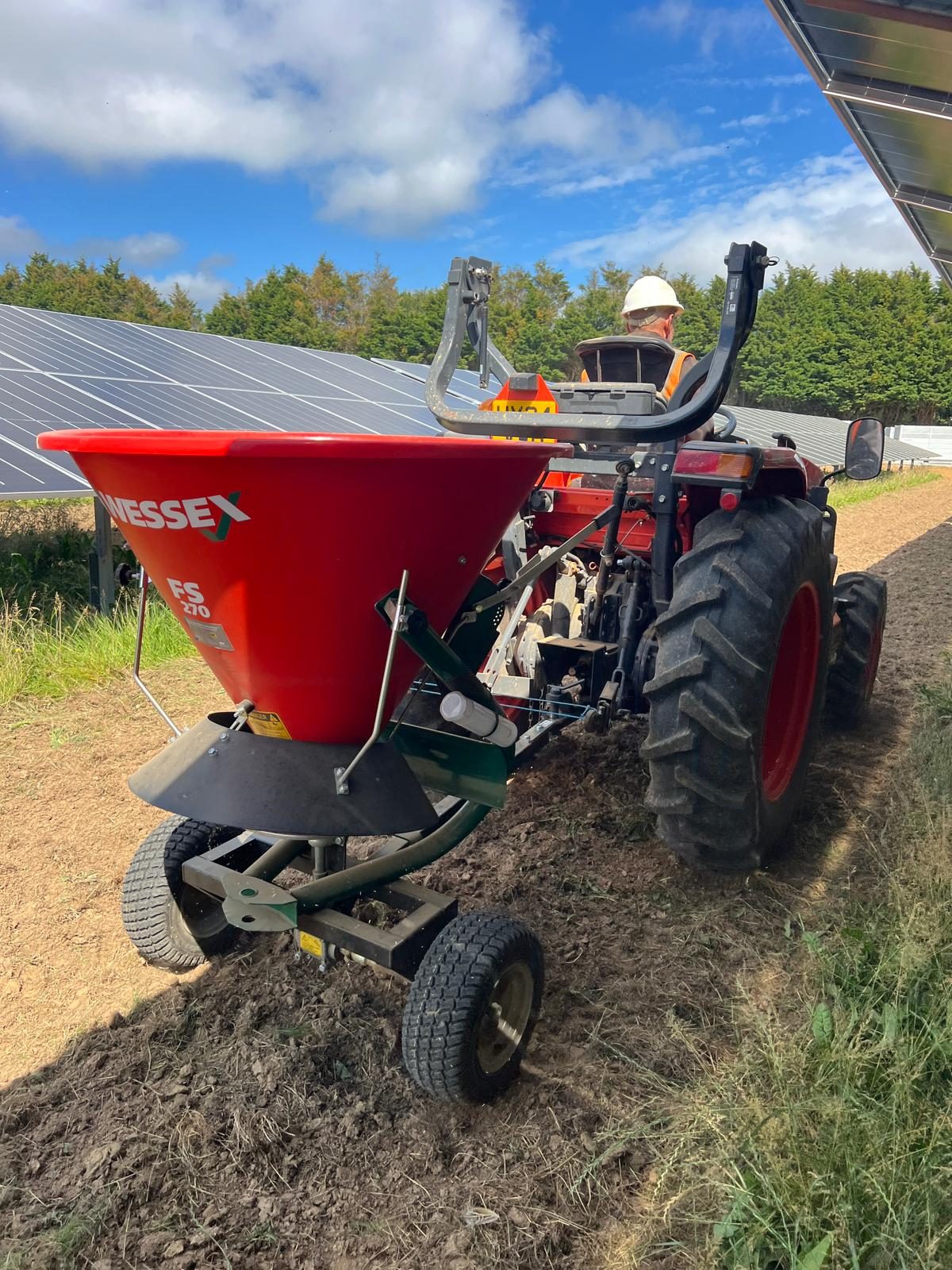
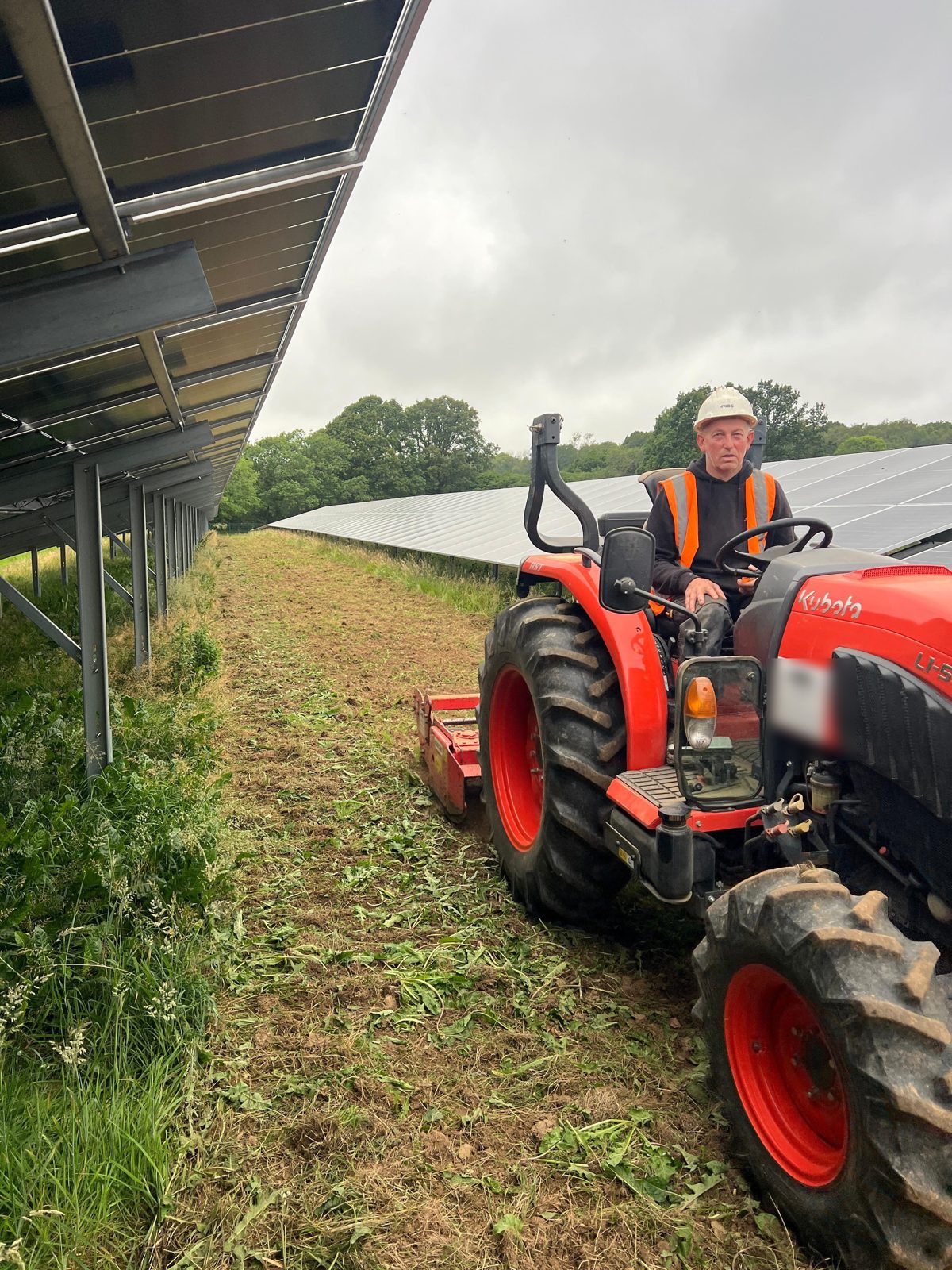
Power-harrowing, cultivation and seeding to re-establish grassland, wildflower or agricultural cover to the specified mixes.
Establishing meadows and species-rich grassland — seedbed, low-nutrient conditions and the right mix for the site, not just a green cover crop.
Native hedging, whips and trees planted, guarded and staked, to the planting schedule in the landscape plan.
Habitat ponds, scrapes and wetland features shaped and profiled — created for ecology rather than for attenuation.
The physical works behind a BNG commitment — habitat creation and enhancement built and planted as the ecologist’s plan sets out, so the gain can actually be evidenced.
Japanese knotweed, Himalayan balsam and ragwort treated or removed so they do not spread through the works or the reinstated ground.
Reptile and newt fencing, mammal gates and protective fencing around retained habitat and root protection areas during construction.
Regrading, surface preparation, stone picking and finishing to return the land to the agreed standard.
Coming back in later seasons to check establishment, cut, re-seed the bare patches and report against the management plan — establishment is judged over years, not weeks.
At end of life, stone and tracks lifted, cable and infrastructure taken out and the land returned to agriculture — the same works in reverse — see roads & trackways.
Biodiversity net gain is a legal requirement on development in England, and it is not a one-season job: the gain has to be delivered and then managed and monitored for thirty years. The ecologist sets the target and writes the plan. Someone still has to dig the pond, plant the hedge, prepare the seedbed and come back the following autumn to put right what did not take.
That is the part we do — the physical delivery behind the management plan, built to the schedule and recorded, so the gain can be evidenced and the planning conditions discharged.
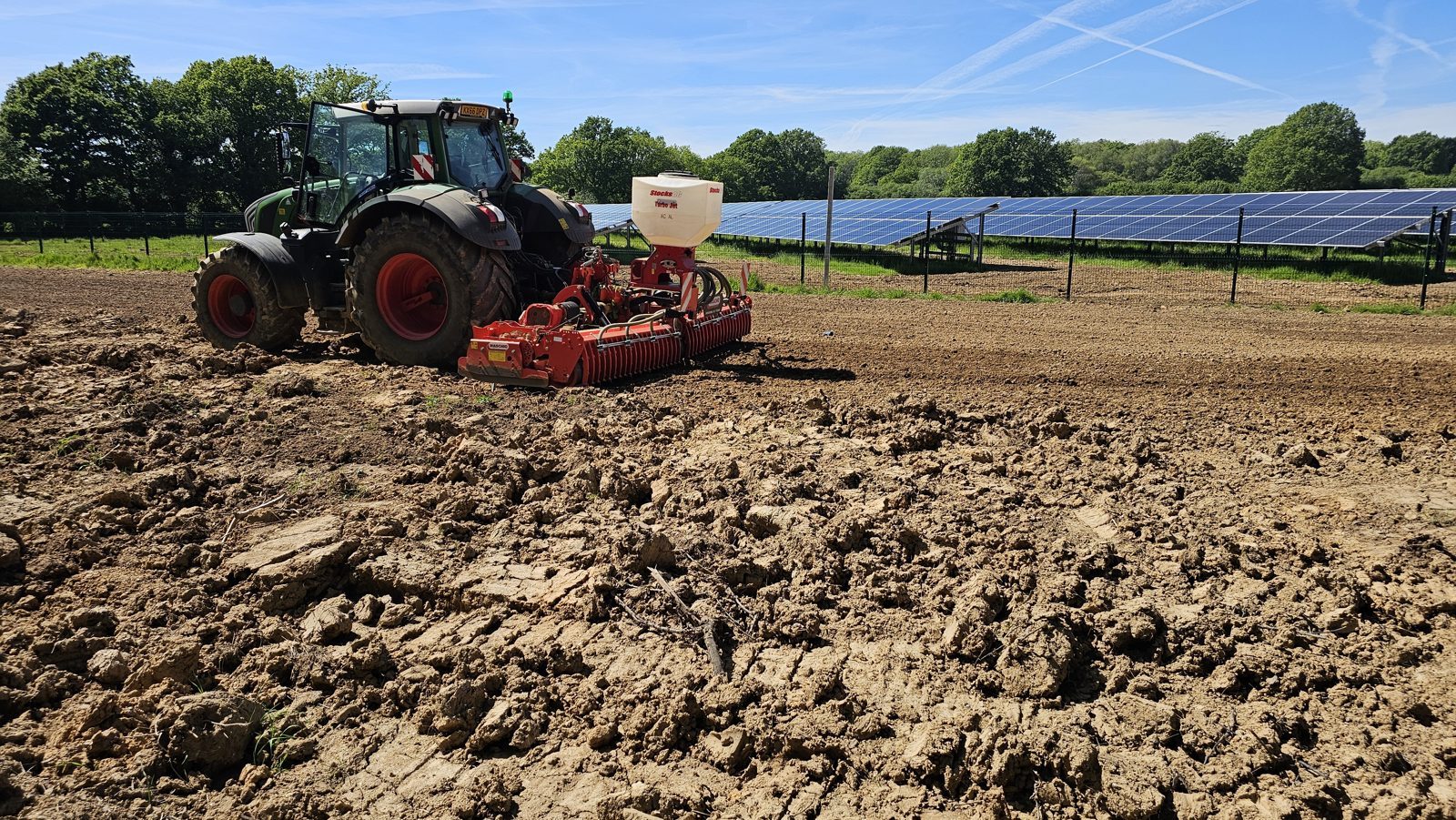
Seeding · East Sussex
Read the landscape and ecology management plan, agree the reinstatement standard, and check what condition the ground is actually in after the build.
Subsoil and rip out the compaction, respread topsoil, regrade, pick the stone off and cultivate down to a tilth that seed will take in.
Sow the specified mixes, plant the hedges, trees and habitat features, then come back in later seasons to check establishment and put right what did not take.
Seeding
Grass management
Cultivation
EstablishmentTaking out the compaction, putting the soil back in the right order, reinstating the drainage, regrading and picking the stone off, then cultivating, seeding and planting to whatever the landscape and ecology plan specifies — and returning in later seasons to check it took.
Because it is the damage a construction programme actually does. Tracked plant, stone and a wet winter close the soil up, so water sits on it and roots will not get down. Spreading topsoil over compacted ground looks finished and fails the following year. Subsoiling first is what makes the difference.
Yes — the physical side. The ecologist sets the target, calculates the metric and writes the management plan; we build and plant what it asks for: habitat creation, hedgerows, trees, meadows, ponds and scrapes, plus the aftercare that keeps them on track.
When it is dry enough. Handling wet soil destroys the structure you are trying to protect, and no amount of later cultivation brings it back. Topsoil and subsoil are also kept apart, stored properly and put back in the right order.
They get reinstated. Cable trenching across farmland regularly cuts existing land drains, and a severed drain shows up as a wet patch the winter after everyone has left.
As long as the plan requires. Establishment is judged over seasons, so it usually means returning to cut, re-seed the bare patches, replace failed planting and report against the management plan — and on a net gain commitment the management horizon is thirty years.
Yes. Decommissioning is the same work in reverse: stone and access tracks lifted, cable and infrastructure taken out, ground decompacted and the land put back into agricultural use.