Civil Engineering
Solar Farm Access Roads & Trackways
Durable access roads and trackways for solar farm and BESS sites, built to take heavy construction traffic and demanding ground — designed, built and maintained in-house.
Get in TouchDurable access roads and trackways for solar farm and BESS sites, built to take heavy construction traffic and demanding ground — designed, built and maintained in-house.
Get in TouchWe design and construct durable access roads and trackways for solar, BESS and energy infrastructure projects. Built to withstand heavy construction traffic and long-term operational use, they provide safe, all-weather access across challenging ground.
From initial site assessment through to final surfacing and maintenance, we deliver practical access tailored to each project.
The junction off the public road — bellmouth construction, visibility splays and gated entrance, built to the highway authority’s requirements for the site.
Temporary haul routes that carry the heavy traffic of a construction programme, then come out again at the end of it.
All-weather roads and trackways for operational access, maintenance vehicles and long-term asset care.
Separation membrane over soft formation, and geogrid where the ground is poor — a stabilised layer carries the same traffic on considerably less stone.
Crushed stone placed and spread in layers, typically 200–300mm of sub-base with a finer wearing course where a smoother surface is wanted.
Passing bays along the route, turning heads at the end of runs and widening at bends and junctions, so deliveries and maintenance vehicles can actually use the track.
Load-bearing pads for crane outriggers, delivery and offloading areas, and hardstanding at gates and compounds.
Pipe and box culverts, cross-drains at low points and crossings of ditches and watercourses along the route.
Grass-lined swales and ditches alongside the track, with outfalls that manage surface water and runoff — see drainage.
Wheel wash at the site entrance and cleaning of the public highway, keeping mud off the road and the planning condition satisfied.
Compaction, trimming and finishing to a durable all-weather running surface that stays usable through winter.
Keeping routes in condition through the life of a site, and lifting temporary tracks at the end — stone out, ground put back — see land restoration.
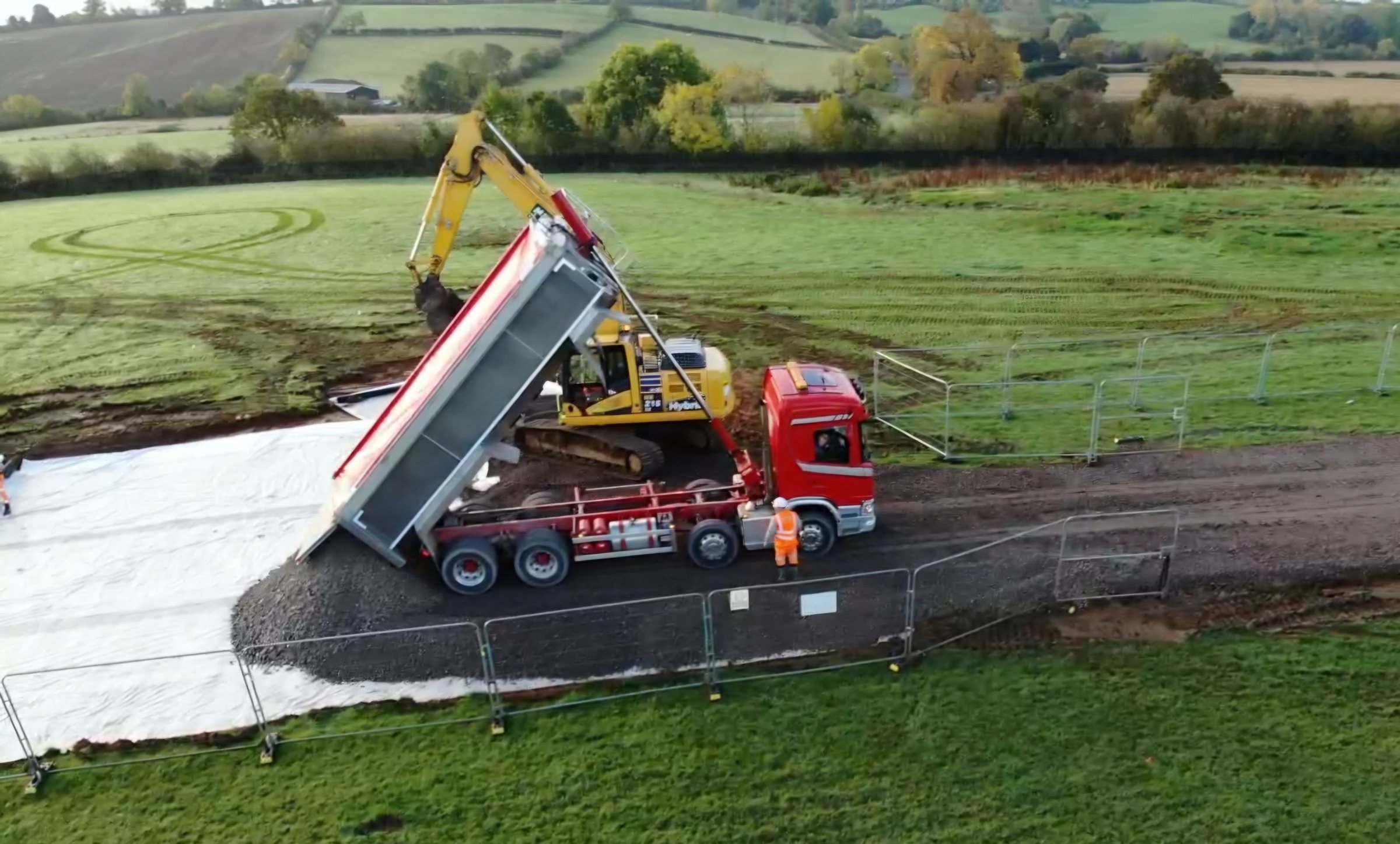
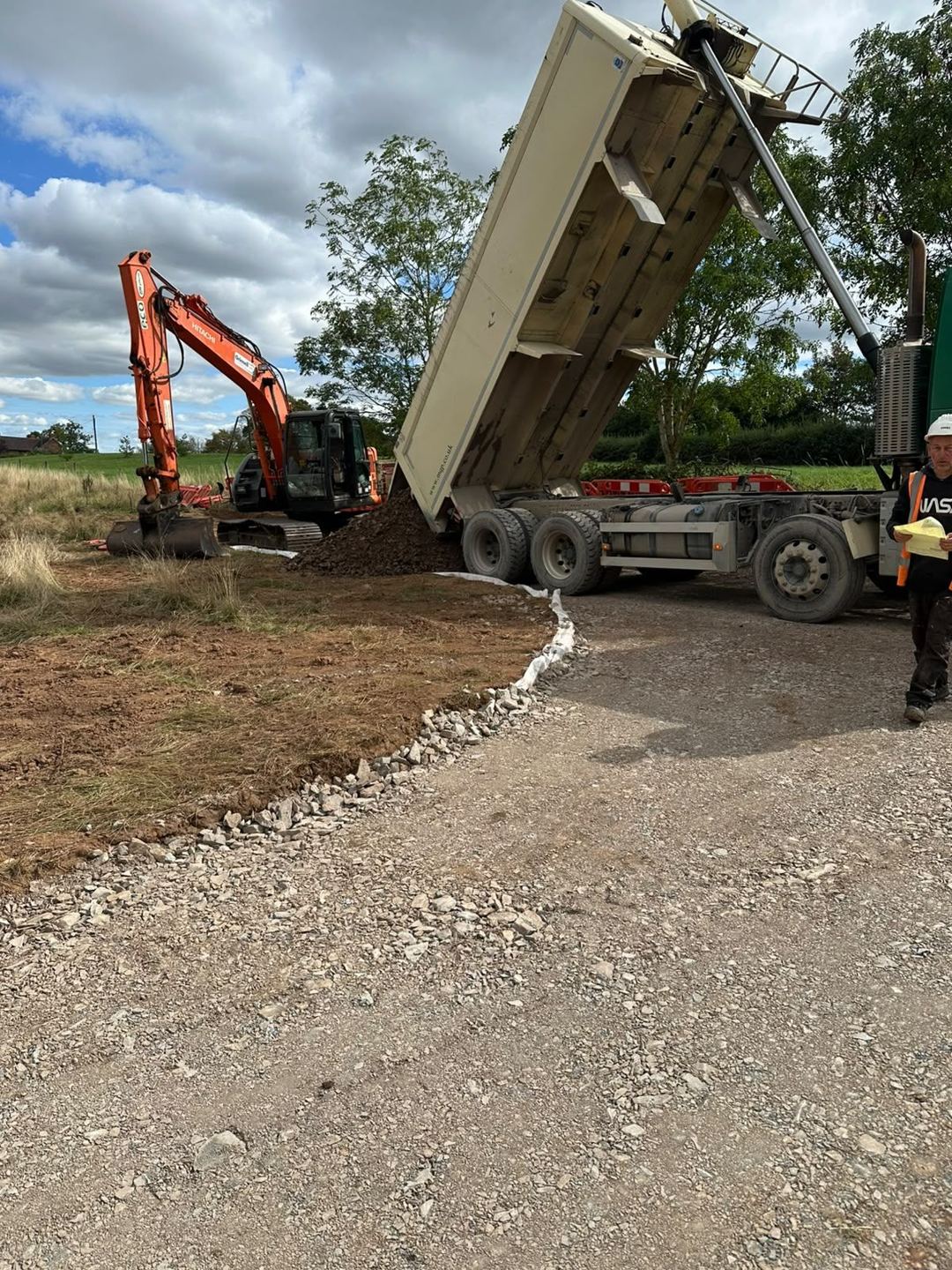
Grass field, autumn, and a construction programme that could not wait for the ground to dry. Geotextile membrane went down over the stripped formation, stone was tipped straight onto it and spread from a tracked dumper where a lorry would have sunk, then rolled to a running surface that carried the traffic for the rest of the job.
Built wide enough at the bends, drained along its length, and lifted again when the site no longer needed it.
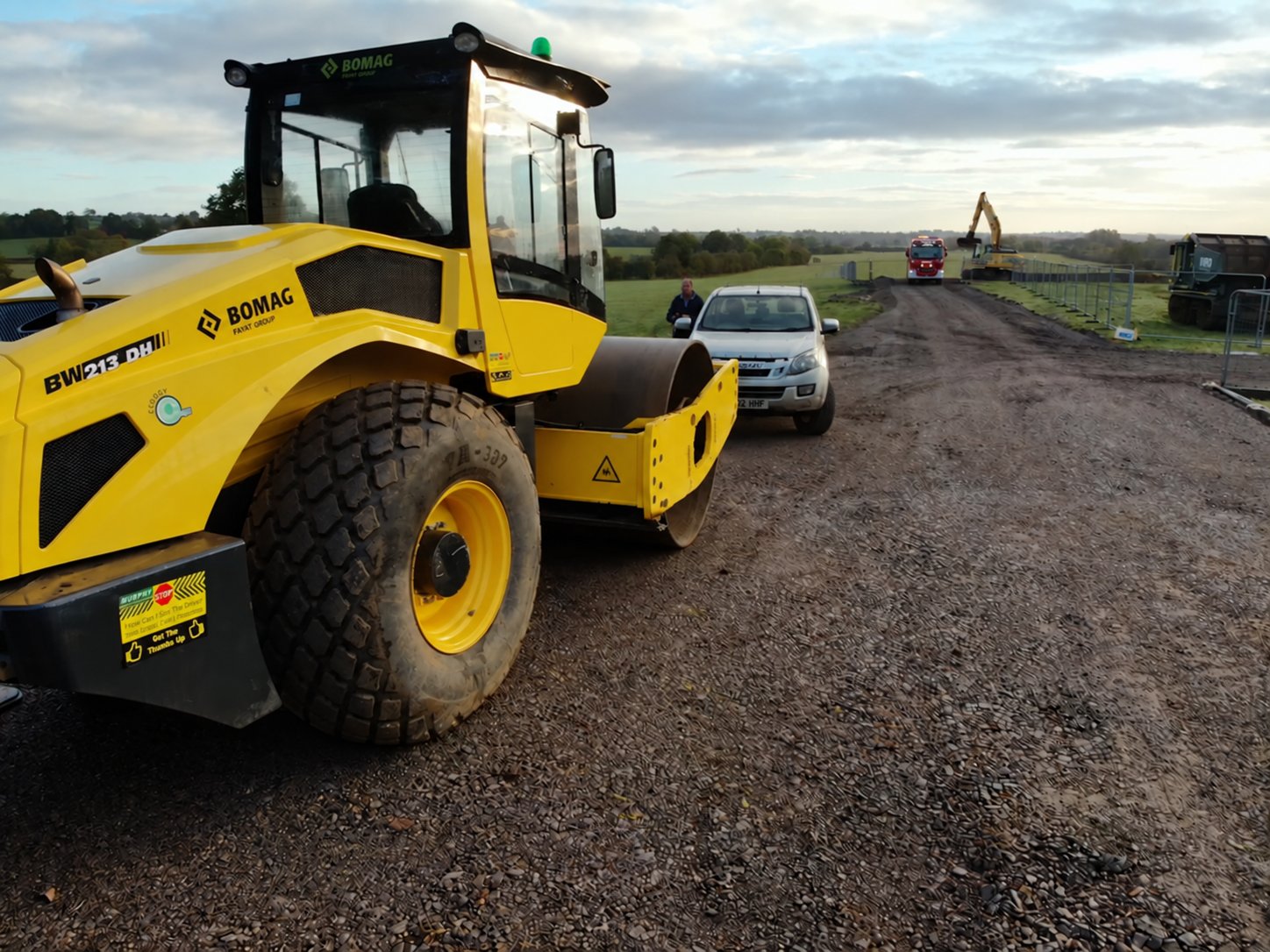 Rolling the surface
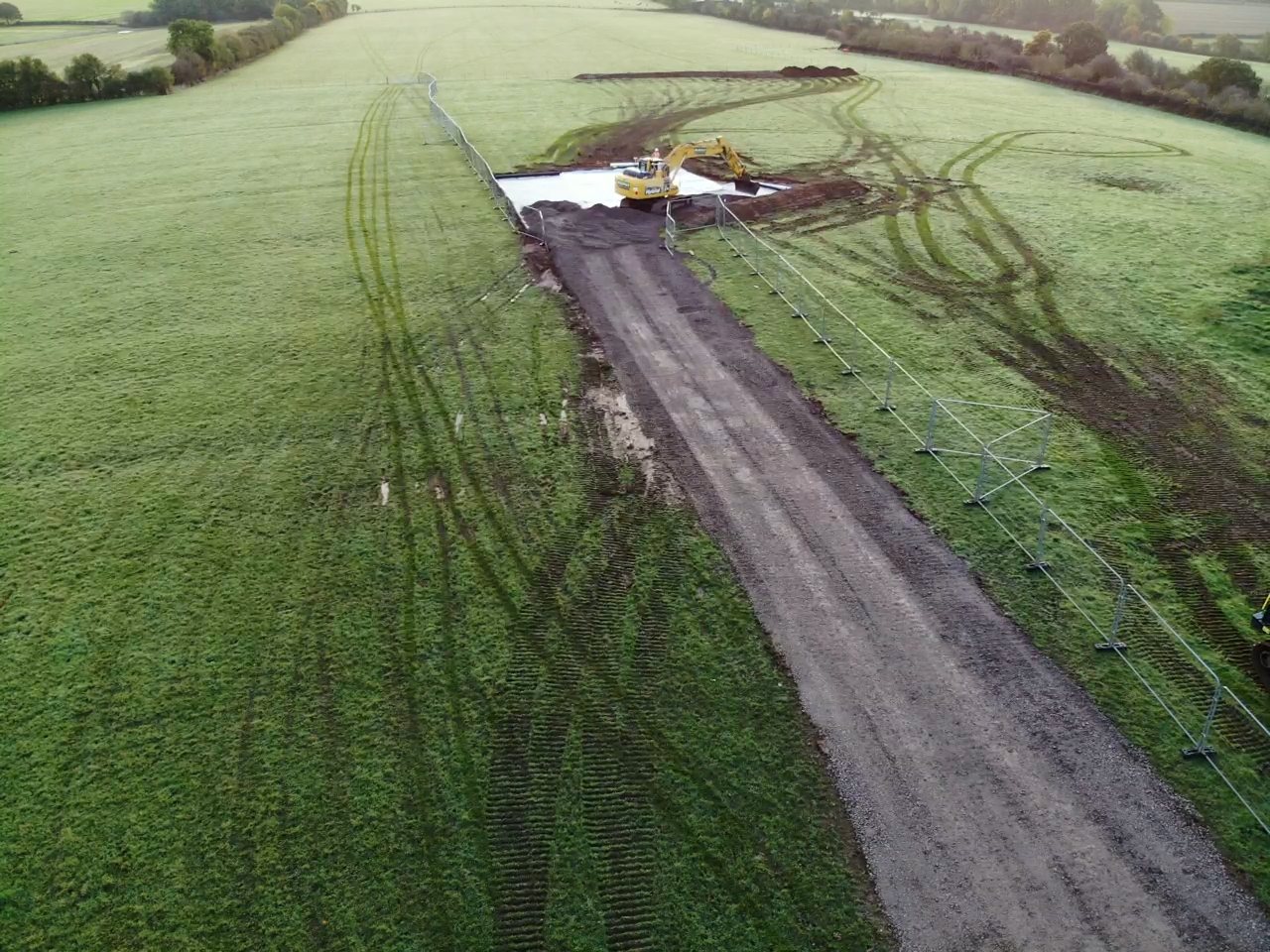 Open to traffic
Strip topsoil and soft material off the track corridor, trim the formation, then lay geotextile membrane — or geogrid where the ground needs stabilising.
Place crushed stone in layers — typically 200–300mm of sub-base, thicker where the traffic or the ground demands it — with drainage and crossings formed as the route goes in.
Compact each layer, add a finer wearing course where a smoother surface is wanted, and finish the passing places, turning heads and gate hardstandings.
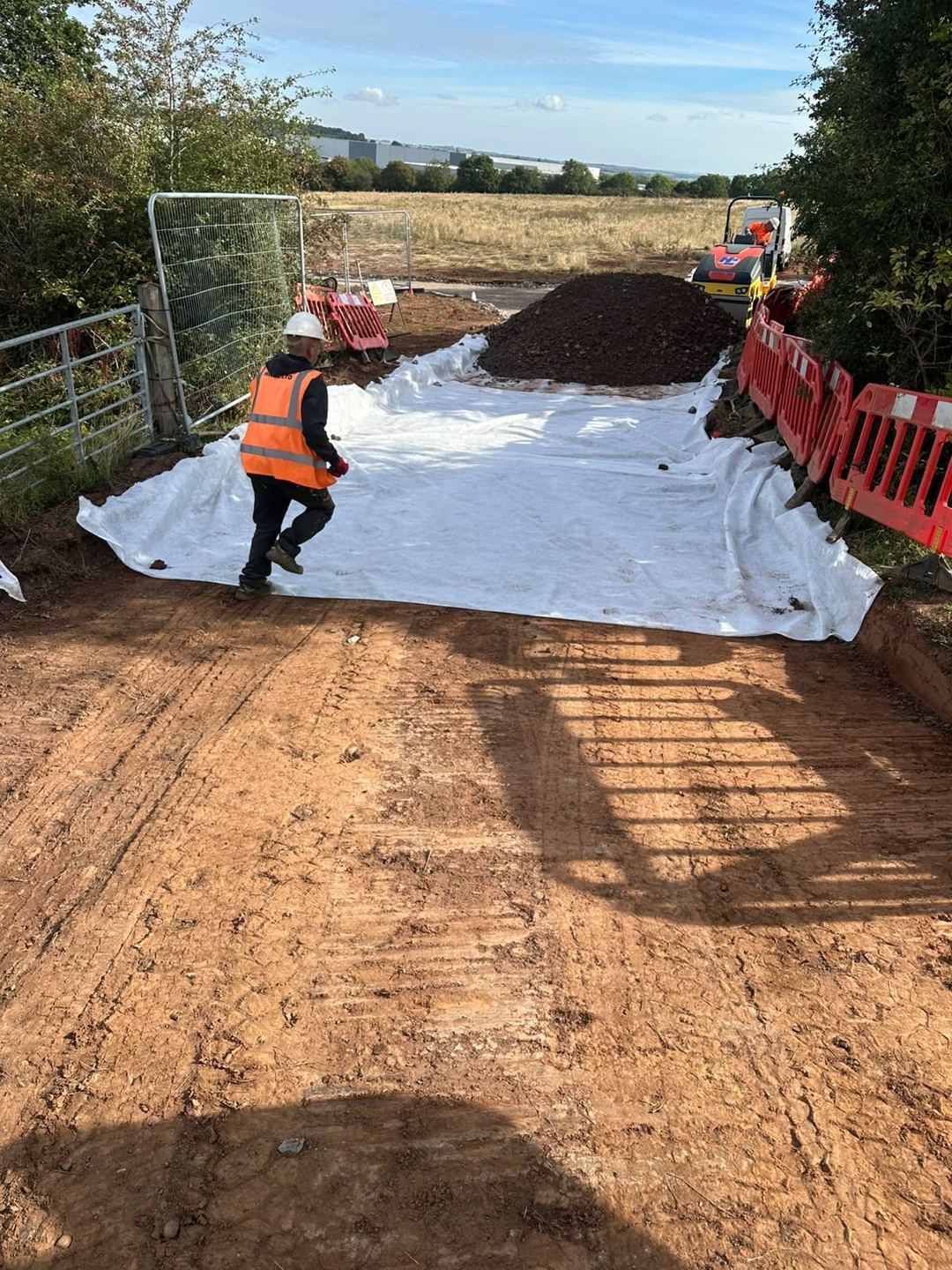 01 · Membrane
 02 · Stone
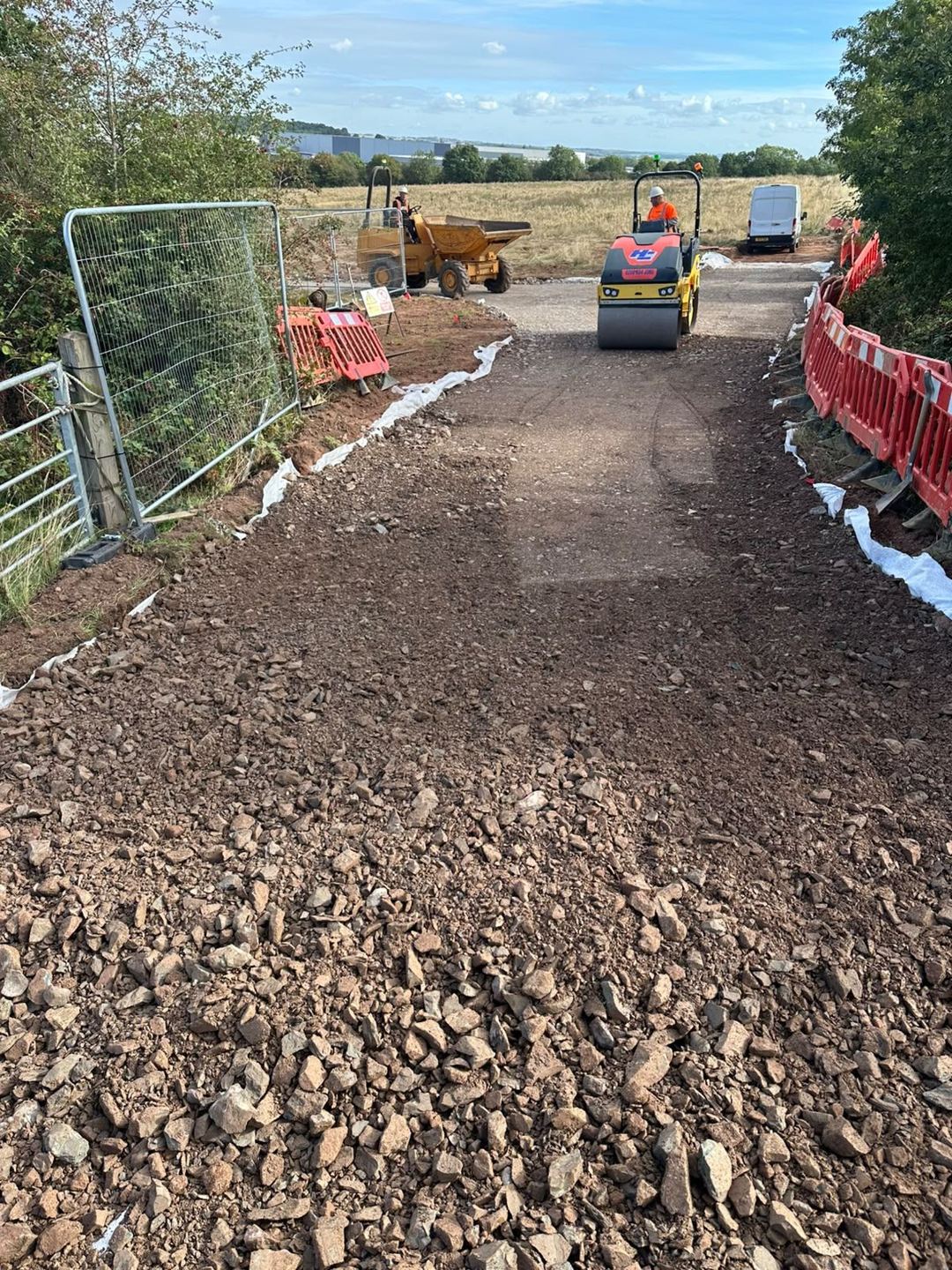 03 · Compaction
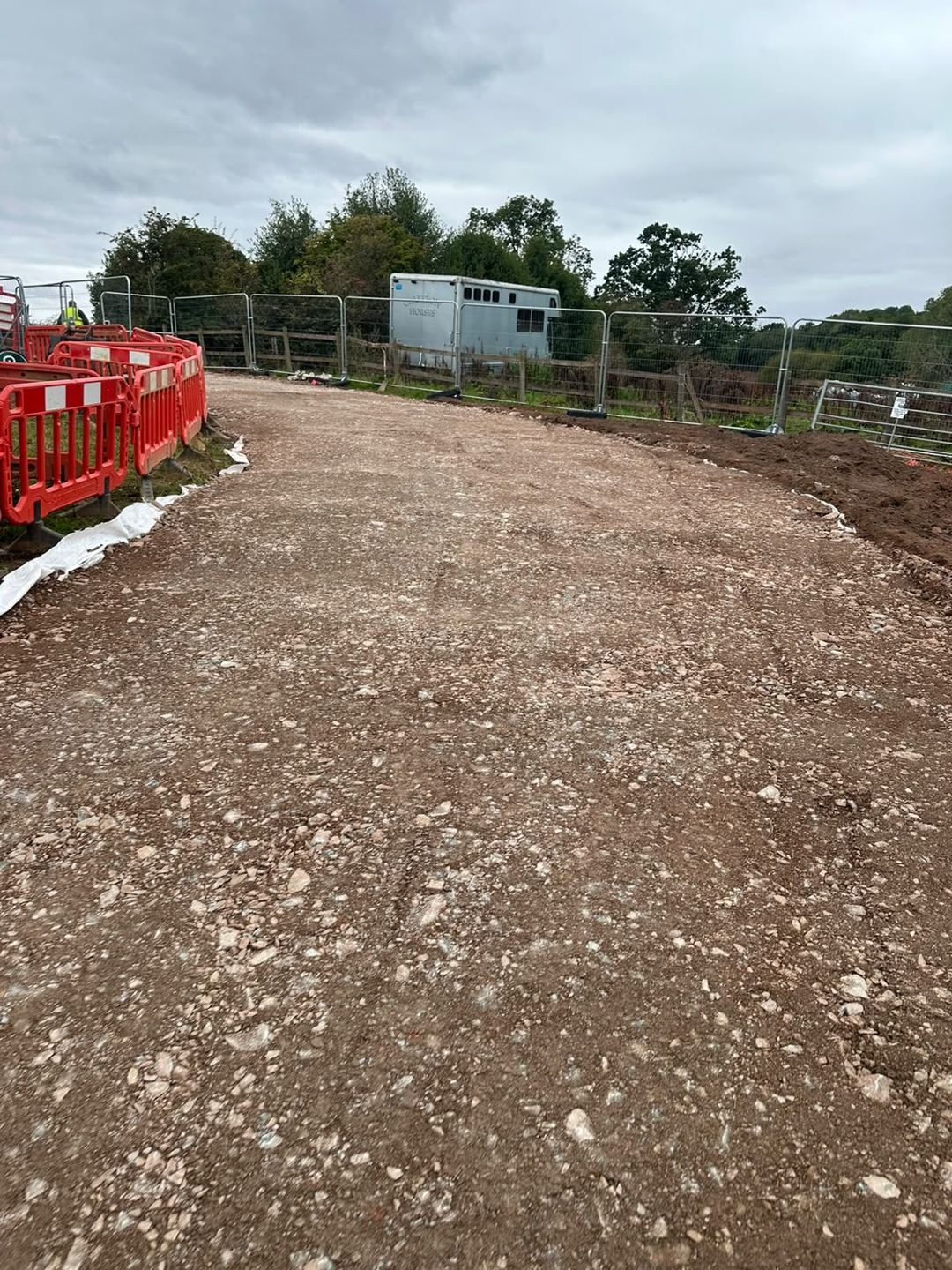 04 · Finished track
Topsoil and soft material come off the corridor first. A geotextile membrane goes over the trimmed formation — or a geogrid where the ground is poor — then crushed stone is placed and compacted in layers, typically 200–300mm of sub-base, with a finer wearing course if a smoother surface is wanted. Drainage, crossings, passing places and turning heads are formed as the route goes in.
Most site tracks run around 3–4m wide, widened at bends and junctions, with passing places along longer runs and a turning head at the end. The right width depends on the vehicles using it — delivery of containers, transformers or panels sets the geometry more than anything else.
Soft ground is normal on these sites in winter. Geogrid stabilisation lets the same traffic run on a thinner stone layer than an unstabilised track would need, which saves stone, lorry movements and time. Where it is worse than that, the answer is usually a deeper build-up, better drainage, or both.
Yes. Bellmouth, visibility splays, gates and the hardstanding behind them, built to the highway authority’s requirements for the site.
Wheel wash at the entrance and road sweeping as required. It is a planning condition on most sites and the quickest way to fall out with a parish council if it is ignored.
Usually both. Haul roads carry the construction traffic and come out at the end; permanent tracks stay for operational and maintenance access. We build either, and we lift the temporary ones and reinstate the ground afterwards.
Yes. Potholing, rutting, edge erosion and blocked drainage all get worse with a winter of maintenance traffic. We repair and re-dress access routes as part of ongoing site maintenance — see maintenance.