Civil Engineering
Drainage & Stormwater
Controlling surface water across a site — attenuation, balancing ponds, piped networks, chambers and outfalls, engineered to manage runoff and reduce flood risk.
Get in TouchControlling surface water across a site — attenuation, balancing ponds, piped networks, chambers and outfalls, engineered to manage runoff and reduce flood risk.
Get in TouchDisturbing ground changes how water moves across it. A renewable development needs drainage that controls surface water, manages runoff and protects both the site and the land around it — often to discharge rates agreed with the planning authority.
HWBC self-delivers the full drainage scope, from land drainage and piped networks to attenuation and balancing ponds, with the earthworks and reinstatement that go with them.
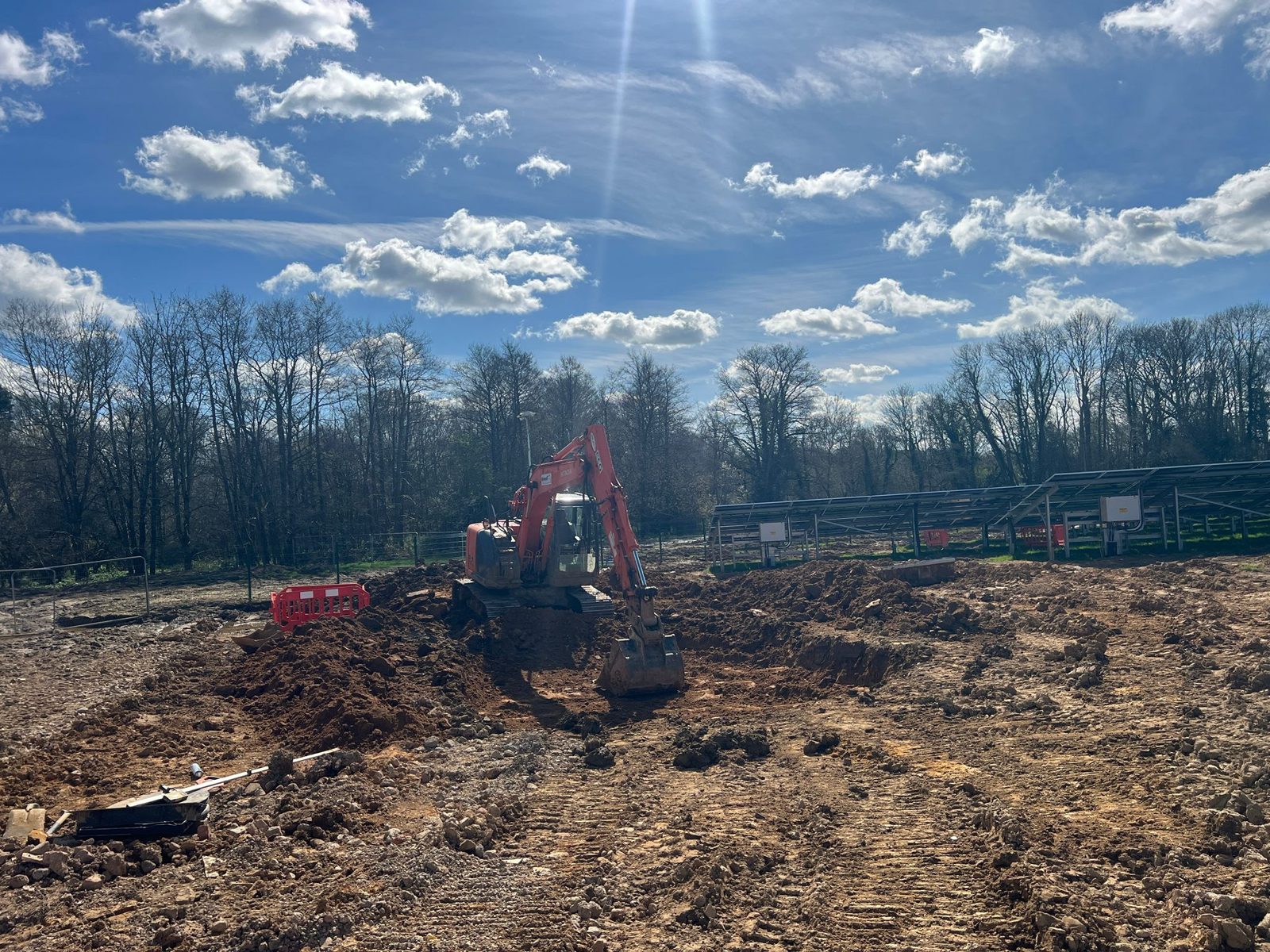
Excavation, shaping and profiling of balancing ponds and detention basins, with the inlet and outlet structures that make them work.
Clay puddle or geomembrane lining where a pond has to hold water rather than lose it into the ground.
Attenuation crates and tanks that store peak flows below ground and release them at a controlled rate.
Grass-lined swales, filter drains and perforated infiltration runs — pipe bedded in pea shingle and wrapped in geotextile — the SuDS features that slow and clean water before it leaves the site.
Surface-water and land-drainage pipe runs, laid to fall, bedded and surrounded, and connected across the site.
Drainage chambers, manholes, catchpits and inspection access built into the network.
Vortex flow-control chambers that hold discharge to the agreed rate, with silt traps, catchpits and class 1 bypass separators keeping grit and oil out of the system.
Headwalls, outfall structures and scour protection that discharge safely into a watercourse or soakaway.
Pipe and box culverts, ditch works and crossings where the drainage or an access route meets a watercourse.
New land drainage on agricultural ground, and reinstatement of existing field drains cut by trenching — so the land drains as it did before the site arrived.
Silt fencing, check dams and settlement lagoons that keep muddy water out of ditches and watercourses while the site is being built.
Drainage built in with access routes and compounds to keep them usable through winter — see roads & trackways.
Air or water testing on sealed systems, staged inspection on perforated and infiltration runs, manhole and level schedules, materials records and as-builts — the network proven and documented at handover.
On the Copwood VFB Energy Hub — a solar and 20.7MWh vanadium flow battery development — HWBC delivered the drainage: two balancing ponds excavated and shaped, and a surface-water and infiltration network across the site. Perforated collector runs bedded in pea shingle and wrapped in geotextile, 150mm and 225mm mains laid to falls, manholes, access chambers and rodding points, and the headwalls and outfalls into the ponds. Verified by staged inspection as it went in, and handed over with a full as-built record.
100mm perforated collectors · 150mm & 225mm mains · 450–1200mm chambers
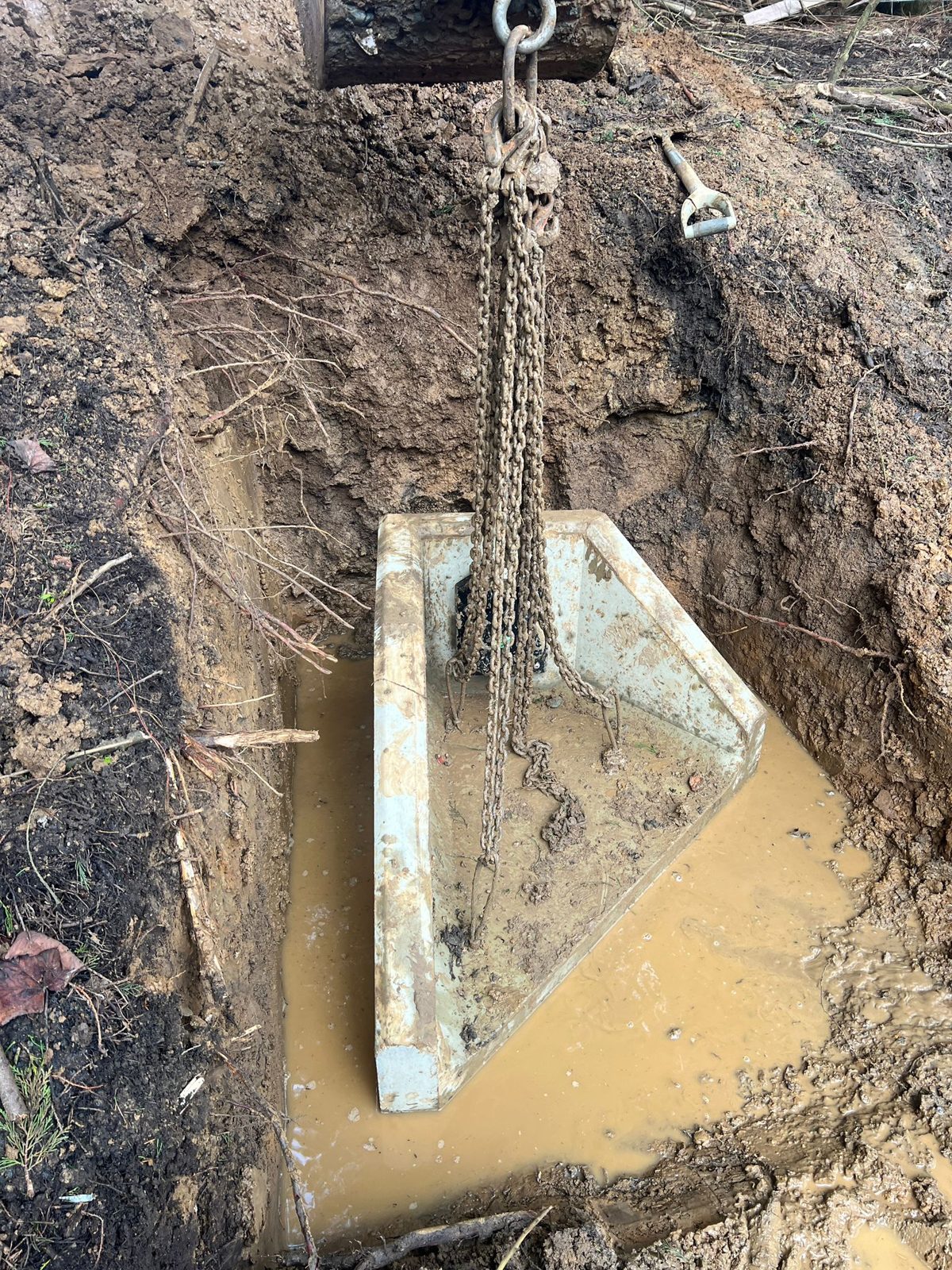 Headwall & outfall · East Sussex
Build to the drainage strategy and the discharge rate agreed with the lead local flood authority — storage volumes, levels and falls set before a bucket moves.
Excavate and shape ponds, dig and bed the pipe runs, set chambers and attenuation, and keep silt out of the watercourse while it is all open.
Build the headwalls and outfalls, connect and test the network, reinstate the ground and hand over manhole records and as-builts.
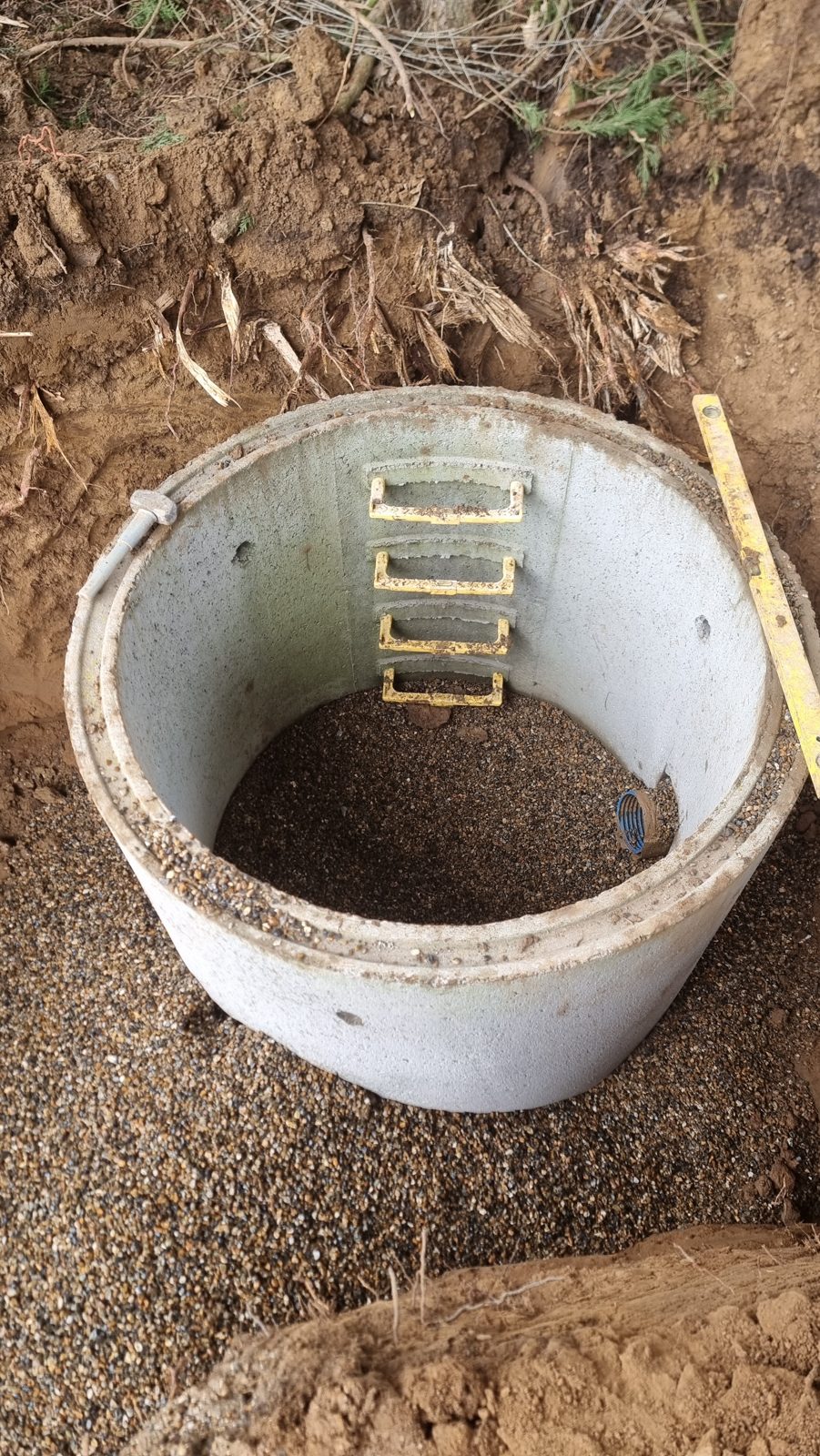 Chambers
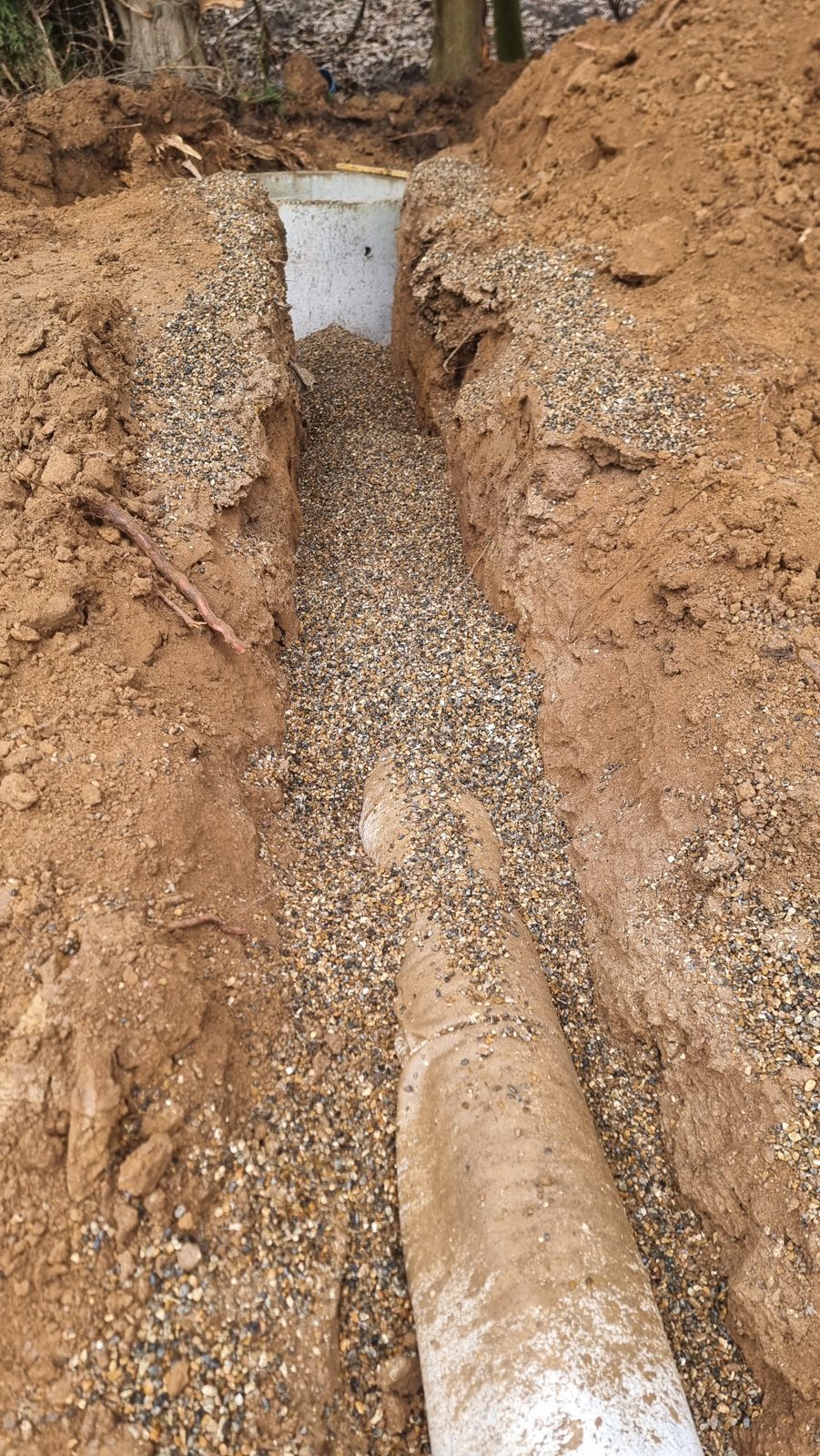 Pipework
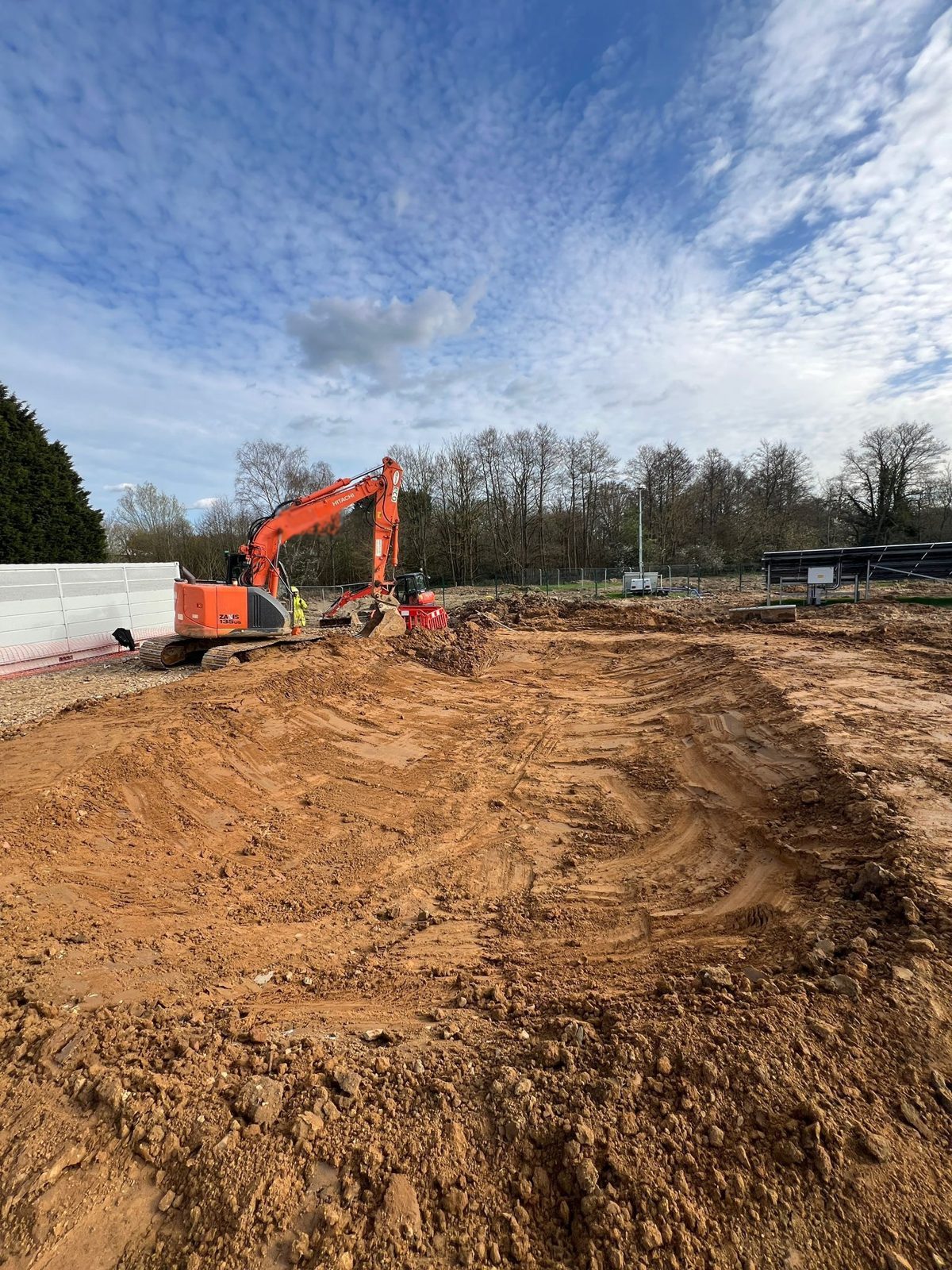 Balancing pond
Because the ground changes. Access tracks, compounds, hardstandings and equipment bases all shed water that used to soak in, and planning conditions cap what the site is allowed to discharge. Drainage holds the extra water back and releases it at the agreed rate, and keeps the tracks and compounds usable through winter.
A balancing pond stores peak rainfall and lets it out slowly through a flow control. The volume comes from the site’s drainage strategy — catchment area, rainfall event and the discharge rate the lead local flood authority has agreed. We build to that design rather than setting it.
Yes — swales, filter drains, infiltration trenches, detention basins and ponds, along with the flow controls, silt traps and interceptors that go with them.
Usually the greenfield runoff rate — what the land shed before anything was built on it — calculated by the designer and agreed with the lead local flood authority. On a solar or battery site that is often only a couple of litres a second, which is why storage and flow control matter so much: the rain arrives quickly and has to leave slowly.
Enough to hold the design storm without flooding, which on current practice means events up to the 1 in 100 year return period with an allowance for climate change added on top. The designer sets the volume; we build the ponds, basins and attenuation that hold it.
Yes. Discharging into an ordinary watercourse needs land drainage consent from the lead local flood authority, and works in or near a main river need the Environment Agency. The consent is normally obtained by the client or their designer; we build the outfall to what has been consented.
They get reinstated. Cable trenching across farmland regularly cuts existing land drains, and a severed drain shows up as a wet patch the following winter. We reconnect them and put new land drainage in where it is needed.
Silt fencing, check dams and settlement lagoons, positioned before the ground is opened up rather than after a downpour. It protects the watercourse and it keeps the site the right side of its consents.
Yes. Sealed systems get air or water testing, and CCTV survey where it is called for. Perforated and infiltration systems are not pressure tested — they are verified by inspection at each stage as they go in: formation, geotextile, pipe line and level, pea shingle surround and backfill. Either way you get a manhole and level schedule, a materials record and as-built drawings at handover, with any approved deviations documented.
No — the drainage strategy and discharge rates come from the project’s designers and the flood authority. We build it, and we will flag anything that will not work on the ground before it goes in.