Reinforced concrete foundations for everything a renewable site stands on — transformers and switchgear, BESS units, inverters, CCTV columns, met masts and more. Engineered to carry the load, self-delivered by our own teams.
Get in TouchA renewable site is full of equipment that has to sit on something solid — transformers and switchgear, battery units, inverters, security cameras, weather stations. Each needs a foundation engineered for its weight, its loads and the ground it stands on.
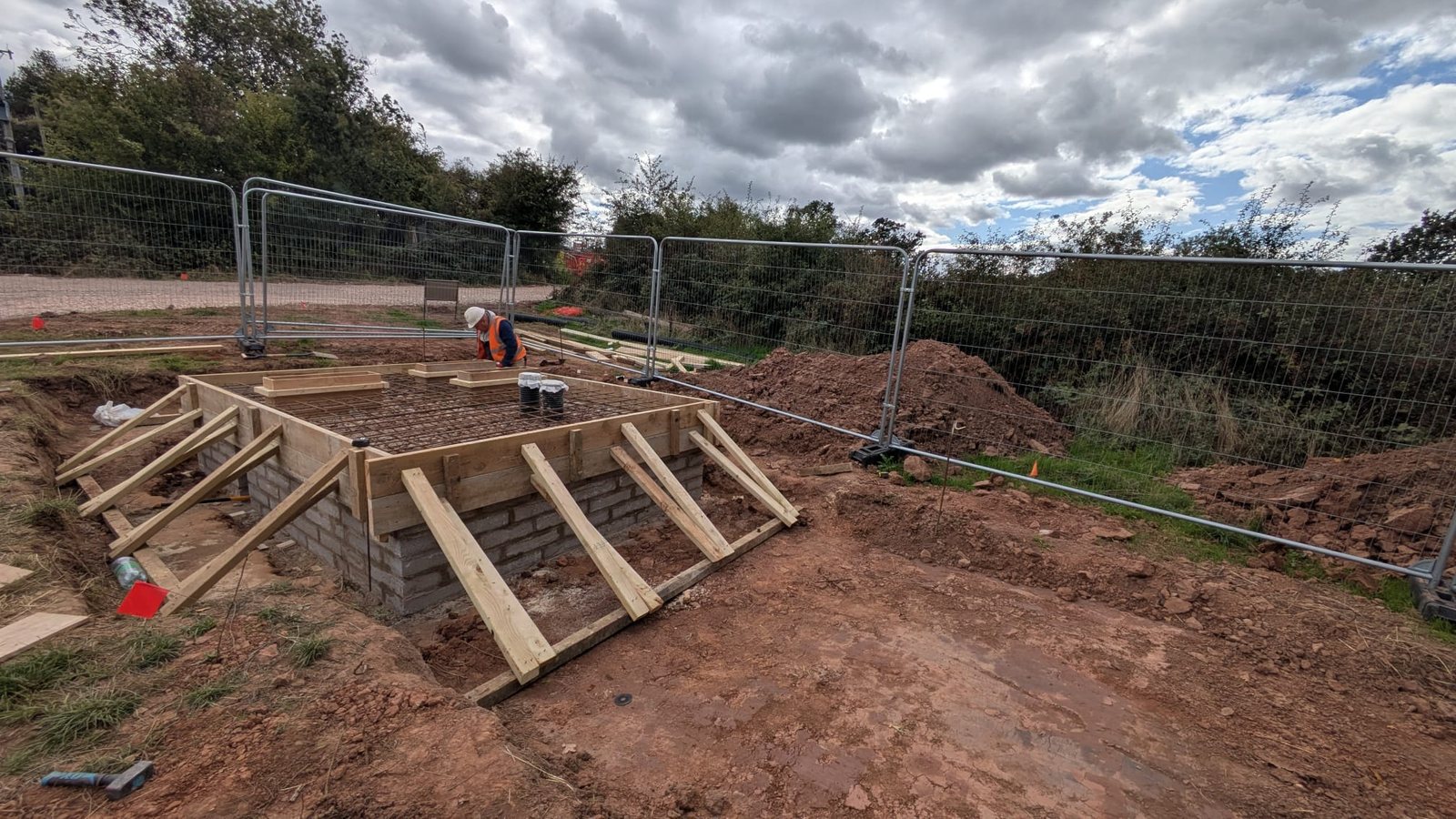
HWBC self-delivers reinforced concrete foundations and bases of all shapes and sizes — from heavy transformer and BESS bases through to slim CCTV and met-mast bases — built to tolerance and ready to receive the unit.
Heavy reinforced bases and plinths for transformers, switchgear, RMUs and control kiosks, set to tolerance with cast-in ducts.
Robust bases engineered to carry the concentrated weight of battery energy storage units and stay stable over the long term.
Bases and plinths for inverters and associated equipment, sized and positioned to the layout.
Smaller reinforced bases for CCTV columns and security infrastructure around the site perimeter.
Bases for weather stations and meteorological masts, set level and to specification.
Bunded foundations and containment bases where equipment requires spill protection or retention.
The smaller foundations that finish a compound — fence posts, gate posts and bollards, set plumb and to line.
Bases set out from survey control to the drawing, with levels and positions confirmed before anything is poured.
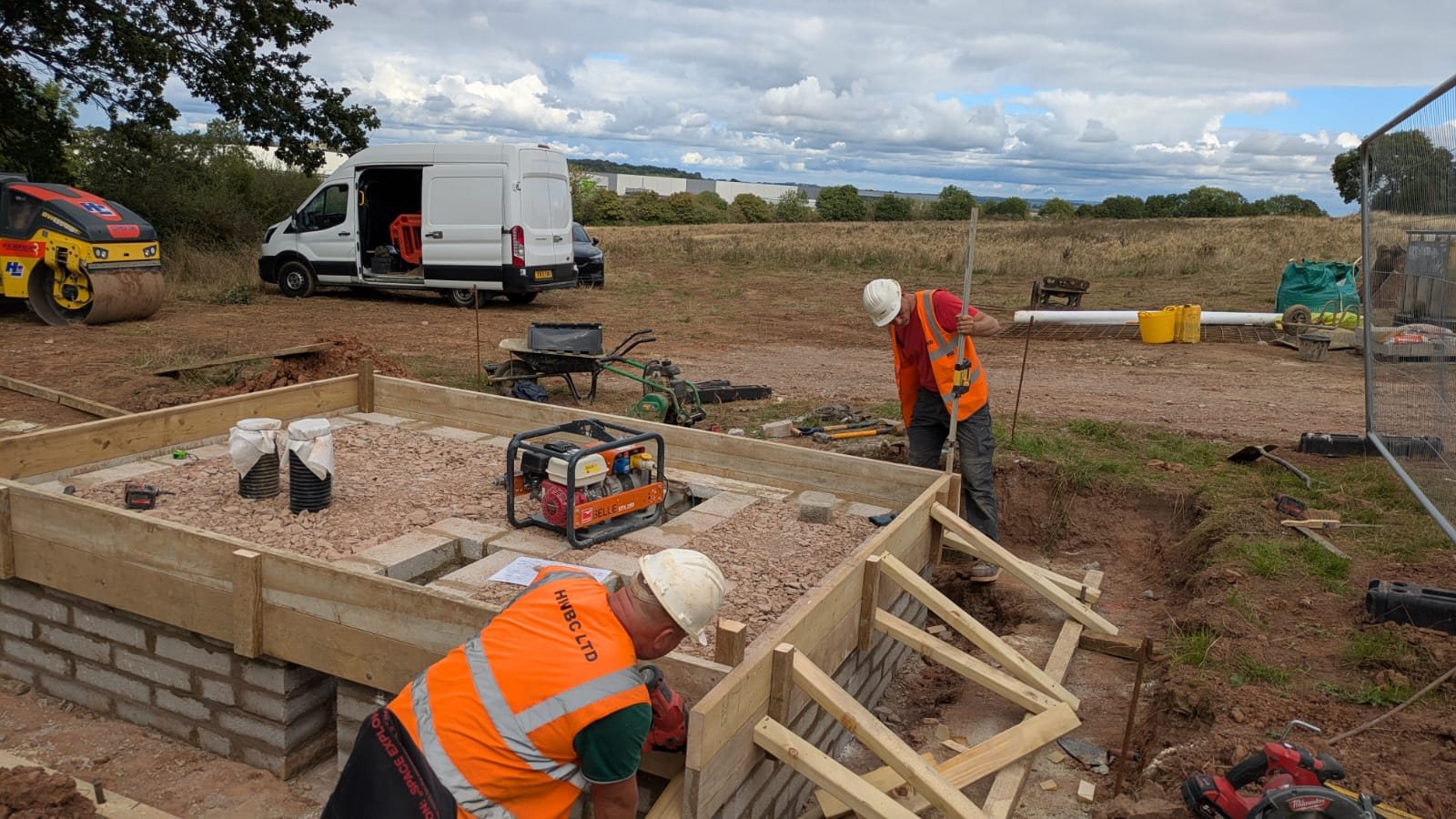
Blockwork perimeters and kickers, timber shuttering and propping — the box that shapes the base and holds the pour.
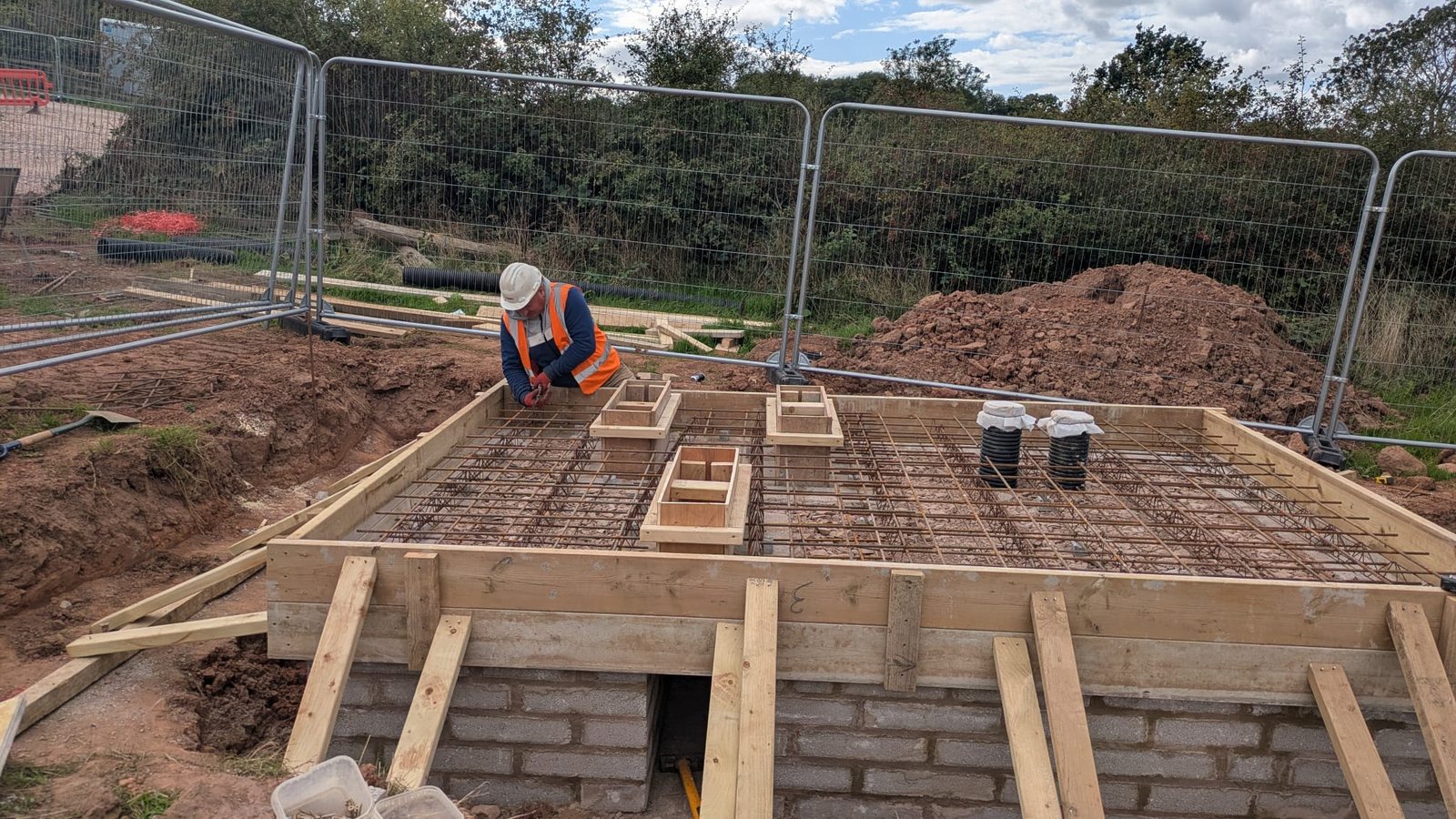
Rebar mats and cages fixed to schedule, with ducts, conduits, earthing tails, holding-down bolts and templates set so the equipment lands on its fixings first time.
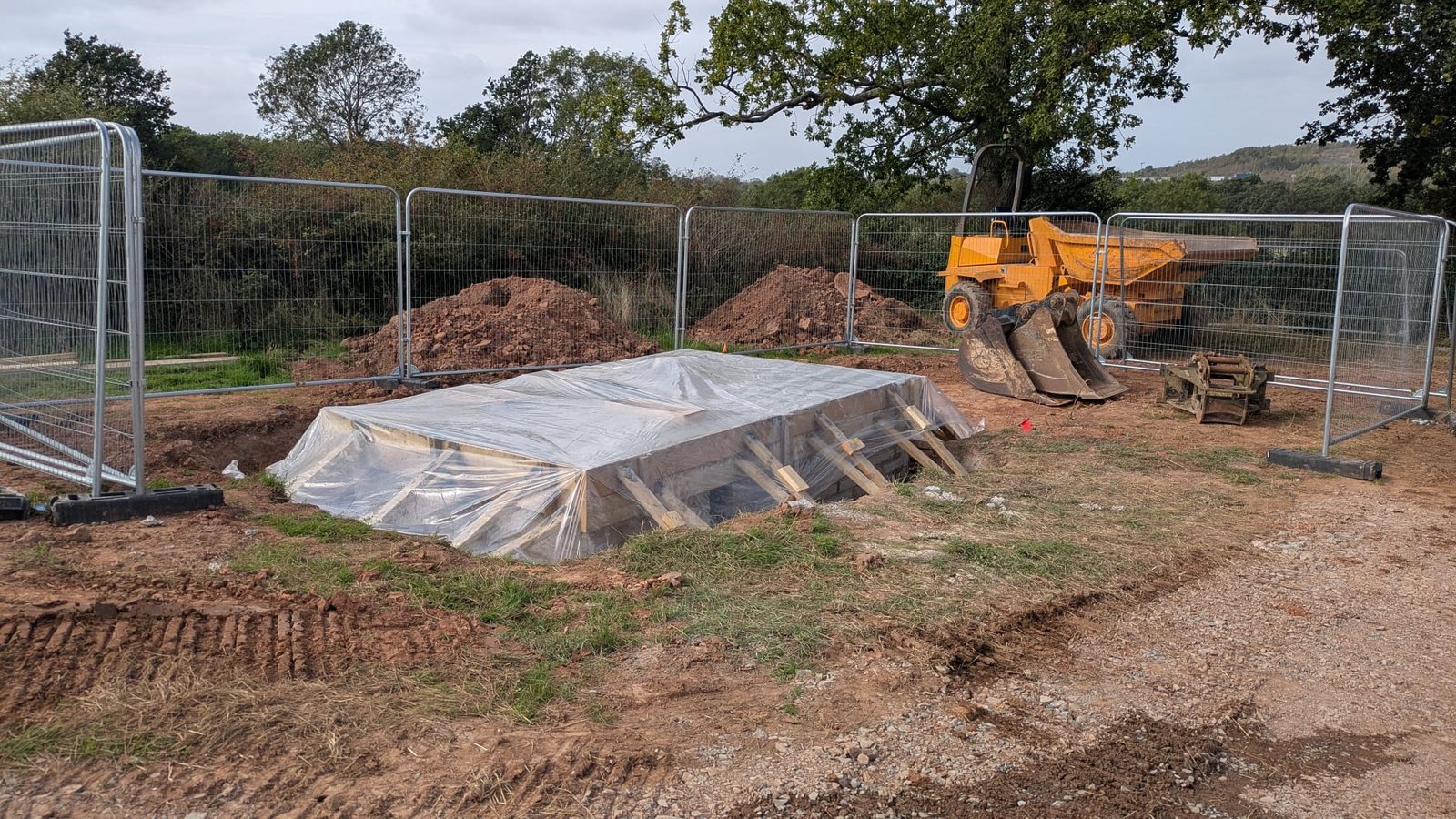
Concrete placed, finished and cured, and protected through cold weather so a winter pour gains strength properly.
Where a precast base suits the programme better, we set and bed it in, and prepare the hardstanding and craneage for the lift.
Slump tests and test cubes on the pour, levels and positions recorded, and as-built information handed over with the base.
A base is only doing its job if it carries the load and stays put. We build reinforced foundations — rebar cages, timber shuttering, cast-in ducts and fixings — set level and to tolerance so the unit drops straight on and stands for years.
Because we self-deliver the groundworks around them too, the bases tie cleanly into the cable routes, drainage and access that surround them.
Shuttered and ready to pour
Set out from survey control, excavate and blind the formation, then build the blockwork kicker and timber shutter that form the base.
Fix the rebar to schedule and set every cast-in item — duct entries, conduits, earthing tails, holding-down bolts and templates — checked against the drawing before the pour.
Place and finish the concrete, take slump and cube tests, cover and cure it — with frost protection in winter — and hand over levels and as-built positions.
HWBC built the reinforced concrete foundations for a combined switchgear and transformer unit — rebar cages and column formwork through to a finished base with cast-in duct entries — then prepared and supported the crane lift that set the unit in place.
Poured bases
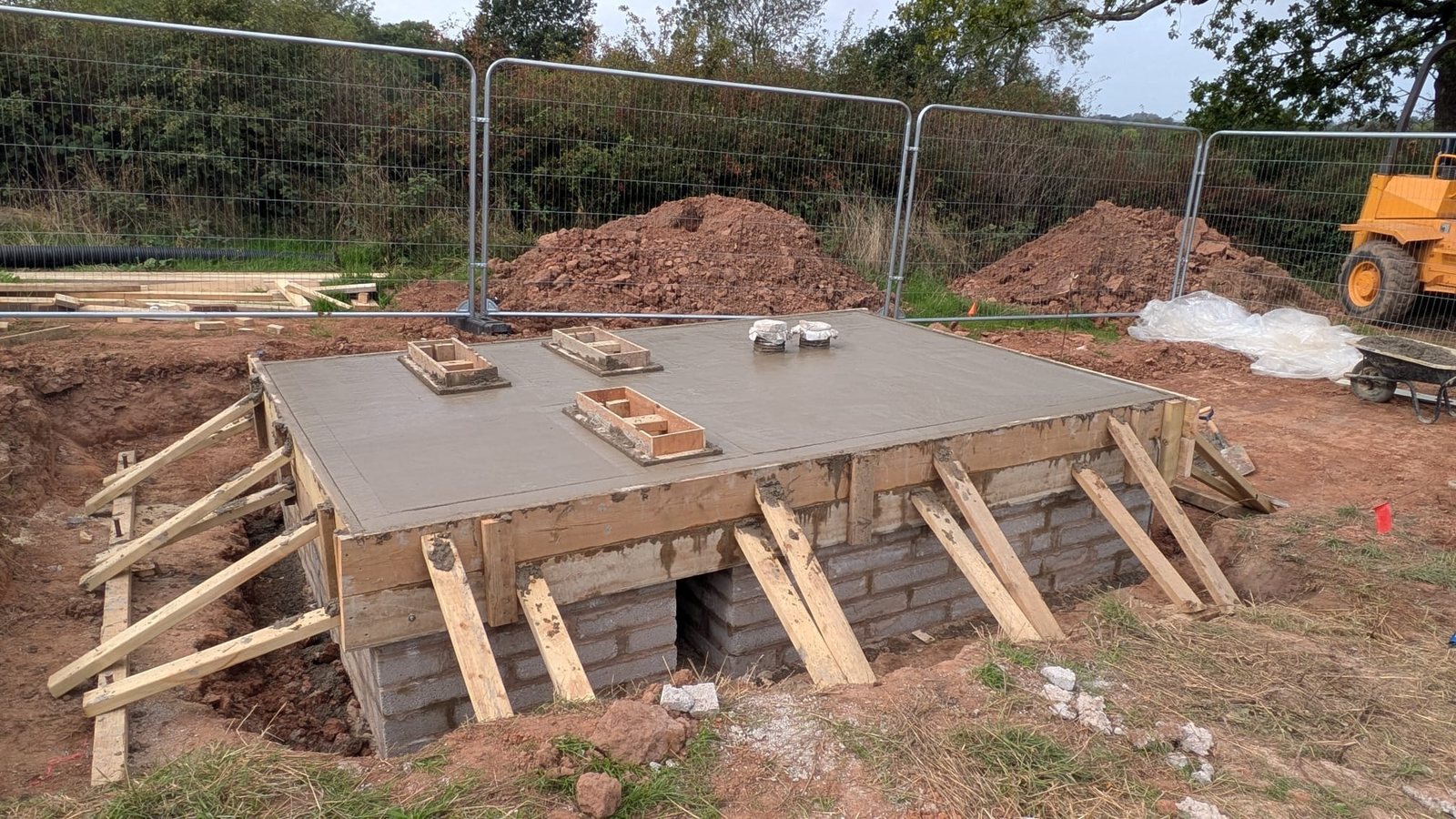
Finished base
01 · Blockwork & shutter
02 · Steel & cast-ins
03 · Pour & cure
04 · Finished baseSet out from survey control, dig and blind the formation, build a blockwork kicker and timber shutter, fix the reinforcement to schedule, set every cast-in item, then pour, finish and cure it. The finished base is level, on position, and has its ducts and fixings exactly where the equipment expects them.
The structural design and loadings come from the project’s engineers and the equipment supplier. We build to that design, and we will flag anything on the ground — soft spots, clashes with cable routes, levels that will not work — before it is poured rather than after.
Holding-down bolts set to a template while the base is being poured. Getting the template right is the whole job: if the bolts are out, the unit does not land, and a crane sits waiting. We check the setting out against the drawing before concrete goes anywhere near it.
Yes, with the right precautions — covering, insulating and protecting the pour so it gains strength and does not get caught by frost. Most of a renewable programme happens through winter, so it has to be workable.
Yes. Slump tests on delivery and test cubes from the pour, with the results kept and handed over alongside levels and as-built positions.
Both. In-situ suits awkward shapes, deep bases and sites where deliveries are difficult; precast suits a tight programme where the hardstanding and craneage can be ready. We will build either and say honestly which one suits the job.
Yes, and it is usually the point. Cable routes, ducting, drainage, hardstanding and access all meet at the base — having one team build the lot means the ducts line up with the trenches and nothing is left for someone else to chase.